
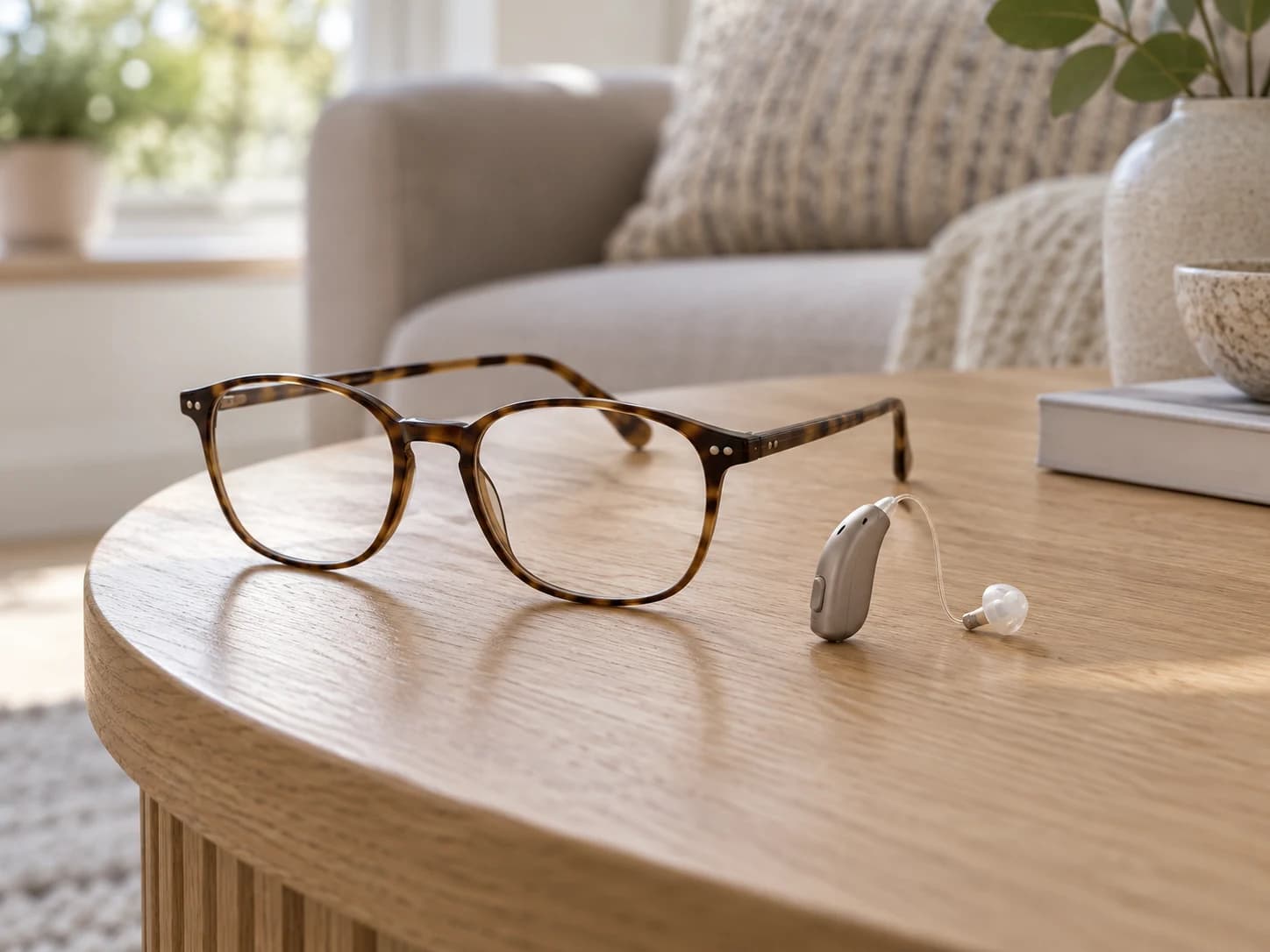
You can wear hearing aids with glasses, but the fit and daily handling need individual attention. Bring your usual frames and explain any difficulty with grip, finger movements or vision. A device should be considered alongside the tasks you will need to manage, rather than chosen by size or appearance alone.
There is no single best hearing aid for everyone who wears glasses or has reduced dexterity. Your hearing, ear shape, controls and available support all matter. A free adult hearing assessment at home is a place to begin that discussion, with no obligation to buy.
Can behind-the-ear hearing aids work with glasses?
Yes. Glasses do not automatically rule out a behind-the-ear or receiver-in-canal style. Both the glasses arm and part of the hearing aid occupy space near the top of the ear, so comfort needs checking with the actual frames you wear.
Royal United Hospitals Bath's patient guide explains wearing glasses alongside behind-the-ear aids and advises asking for a fit check if they do not sit comfortably. It also notes that an optician may need to check how the frames fit. That advice does not establish which device or adjustment is right for your ears.
Bring reading glasses, everyday glasses and sunglasses if you regularly swap between them. Tell the clinician if putting frames on moves the hearing aid, creates rubbing or makes it hard to keep the earpiece secure. Do not bend the aid, trim its parts or force the glasses over it yourself.
Our hearing-aid styles guide explains where different designs sit. An in-the-ear device leaves the space behind the ear clear, but its suitability and ease of handling still need checking. Small does not automatically mean simple to use.
Choose around the tasks you do each day
Comfort, handling and controls deserve the same attention as how the hearing aid sounds.
Wear them together
Bring your usual glasses and explain any pressure behind the ears. Ask how the recommended style sits alongside the frames you wear.
Does the fit work with my glasses?Check the routine
Discuss putting aids in, taking them out and managing their power. Ask what practical support could help you feel confident with the daily routine.
Can I manage the everyday tasks?Plan the support
Explain any difficulty with grip, sight or small controls. Ask what adjustments, instructions or help could make the recommended option easier to use.
What support would make a difference?What should you explain about your hands and vision?
Describe the task you find difficult rather than trying to choose a technical feature first. For example: “I can hold my glasses, but I struggle to pick up a small battery,” or “I cannot easily see which aid goes in which ear.” These are useful things to raise before a recommendation.
NICE's assessment guidance includes dexterity and individual communication needs. You can ask how those factors affect the proposed fitting and what support is available. Mention changes that vary during the day, such as stiffness or fatigue, so the discussion reflects your usual routine.
Useful questions include:
- Can I identify the right and left aids using markings I can see or feel?
- Can I hold the device, position its earpiece and remove it safely?
- Can I use its controls without accidentally changing another setting?
- Can I manage charging or battery changes in the place I will use at home?
- Which cleaning tasks can I do, and which should I ask someone to help with?
Are rechargeable aids easier if small batteries are difficult?
They may avoid handling disposable batteries, but charging has its own practical steps. Ask about the exact charger: placing each aid correctly, recognising its charging indicator, removing it and connecting the power supply. A charger should be assessed as part of the routine, not treated as proof that the whole device will be easy to use.
For disposable-battery models, discuss opening the compartment and safely managing the battery. Keep button batteries away from children and pets. The rechargeable versus battery guide covers power options in more detail without assuming one suits everyone.
Would a phone app or remote control help?
Possibly, if it makes a task easier for you. Ask which settings can be changed on the aids themselves, which require an accessory and whether a compatible phone is needed. Check readability and ease of use rather than assuming an app removes every handling difficulty.
Bring the phone you actually use and explain whether you want to use an app. Our Bluetooth and phone compatibility guide separates app controls from call streaming. The features available depend on the hearing aid, phone and software; a family member's compatible phone is not evidence that yours will work.
What should happen at fitting and follow-up?
Ask the clinician to explain the handling routine for the exact device and earpiece. Practise insertion, removal and power management using those instructions, with time to say which steps remain difficult. Do not force an earpiece into place or copy a technique intended for a different design.
You can request clear written instructions, another explanation or involvement from someone you choose. Ask what help is available before assuming that a particular adaptation, accessory or demonstration arrangement is included. Our fitting and first-weeks guide explains how to prepare for that conversation.
If an aid becomes painful, rubs the skin or repeatedly moves out of place, contact the fitting provider for advice. Hearing aids should not depend on tolerating a poor fit. For cleaning, filters and parts, use the instructions for your own device and our everyday care guide; do not dismantle it to solve a handling problem.
Make handling part of your recommendation
Tell Hear Better about your glasses, grip, vision and current aids when you enquire. Liam Robson, HCPC-registered hearing aid dispenser, HAD03779, can discuss those needs alongside the assessment findings. Home visits serve adults across North East England, with postcode and appointment arrangements confirmed when booking.
If hearing aids are appropriate, ask how the recommended option addresses both listening and practical use, then confirm the complete price and care terms before deciding. Explore Hear Better's independent hearing-aid service or request a free home hearing test. Hearing aids are an optional paid purchase.