

The main types of hearing aid are receiver-in-canal or receiver-in-the-ear devices, behind-the-ear aids, in-the-ear aids and smaller in-the-canal or invisible styles. None is automatically best. The appropriate style depends on your hearing prescription, ear health, comfort, dexterity, eyesight, listening goals and the features you actually need.
Start with a proper hearing assessment, then compare clinically suitable styles. Size and appearance matter, but a discreet aid that is difficult to insert, underpowered or missing a useful feature is not a good compromise.
Hearing-aid styles at a glance
Explore each hearing-aid type
Select a style to compare its position, strengths and practical compromises.
The versatile modern option
Receiver in canal
A small case sits behind the ear. A thin wire leads to the receiver in the canal.Often considered for
Many mild to severe prescriptions where the ear and fitting allow it.
Common strengths
- Discreet behind the ear
- Strong rechargeable and Bluetooth choice
- Open or custom earpiece options
Style names describe where the aid sits, not its technology level. Two aids with a similar shape can have very different power, features and fitting ranges.
The NHS hearing-aid guide and the FDA description of hearing-aid styles use slightly different abbreviations, but describe the same broad families.
Receiver-in-canal hearing aids

The small case sits behind the ear while a thin wire carries sound to the receiver inside the canal.
Receiver-in-canal, RIC, and receiver-in-the-ear, RITE, usually describe the same arrangement. A small case containing the microphones and processor sits behind the ear. A thin wire connects it to the receiver, or speaker, in the ear canal.
RIC devices are popular because they can combine a relatively discreet appearance with useful power and modern connectivity. Different receivers, domes or custom earpieces may allow the same basic style to support a range of prescriptions.
They may suit someone who wants:
- A small device without placing all the electronics inside the ear.
- Rechargeable options and phone connectivity.
- An open fitting where clinically appropriate.
- Flexibility if the prescription changes.
They still need to fit the ear correctly. Wax, moisture, ear-canal shape and the ability to insert the receiver all influence whether this style is practical.
Behind-the-ear hearing aids
A behind-the-ear, BTE, aid keeps the main electronics behind the ear. Sound travels through tubing to a dome or custom earmould. BTE devices range from slim open-fit models to larger, more powerful instruments.
The NHS describes BTE aids as suitable for most people and among the easiest styles to use. Their larger case can provide more room for controls and power. A custom earmould can also provide secure retention and controlled sound delivery where more amplification is needed.
BTE aids may be worth considering when:
- Ease of handling is more important than minimum size.
- A stronger output or secure earmould is needed.
- Smaller controls or battery doors would be difficult.
- A robust, serviceable design is preferred.
Glasses do not automatically rule out a behind-the-ear style. The frame, aid and ear shape need to be considered together.
In-the-ear and in-the-canal hearing aids
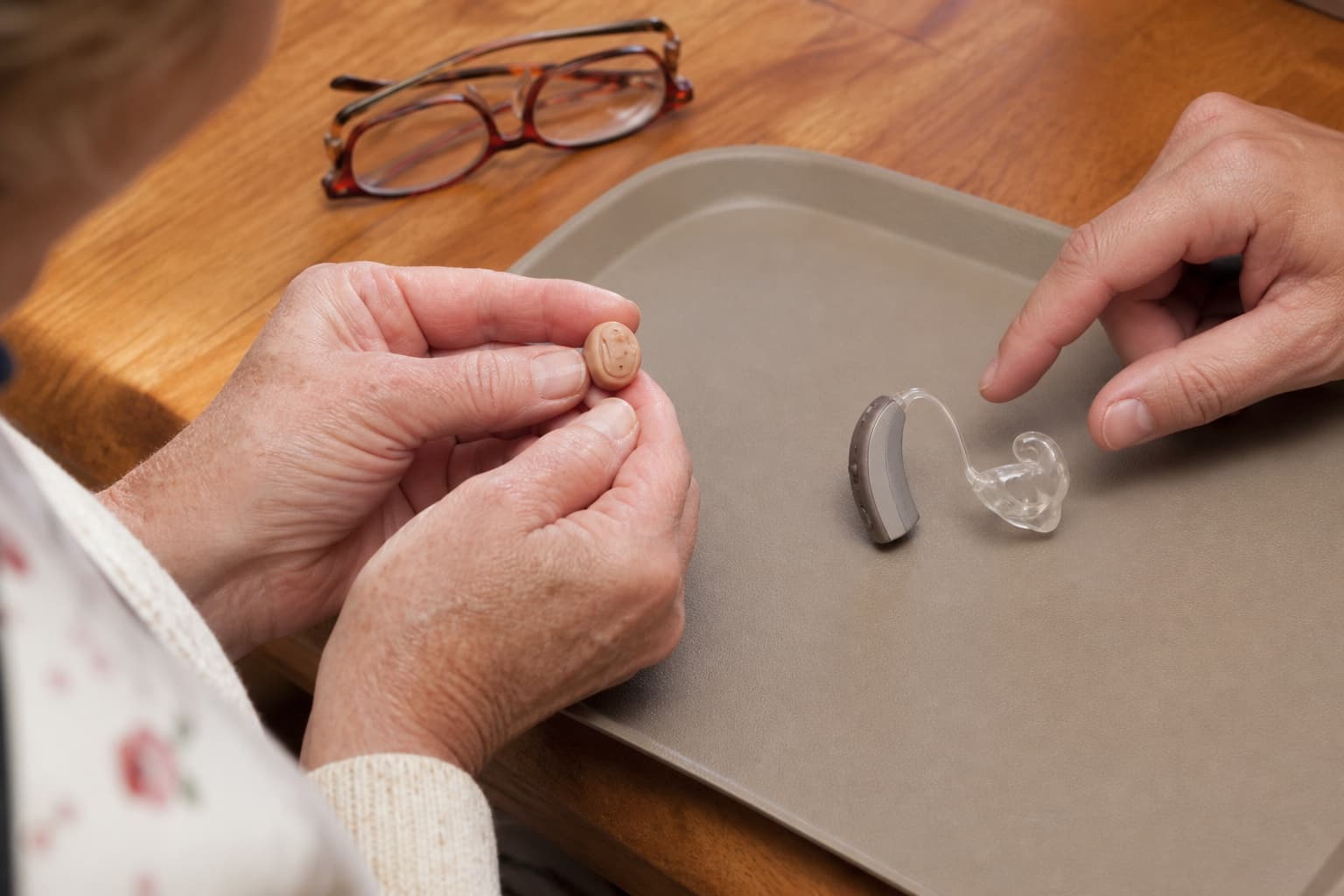
Smaller can mean less visible, while a larger aid or earmould may be easier to hold, insert and maintain.
In-the-ear, ITE, hearing aids place the electronics in a custom shell that occupies part of the outer ear. In-the-canal, ITC, versions are smaller and sit closer to the canal opening. Completely-in-canal, CIC, and invisible-in-canal, IIC, devices sit deeper.
Larger ITE devices can be easier to grip than very small aids and may offer more room for controls. Smaller canal aids are less visible, but their size can restrict battery capacity, wireless features, microphones or manual controls. They can also be harder to insert and remove.
Suitability depends on:
- The degree and shape of hearing loss.
- Ear-canal size and shape.
- Wax and moisture.
- Finger dexterity and eyesight.
- Whether rechargeable power, directional microphones or direct streaming are required.
Invisible should never be treated as a clinical advantage by itself. The smallest style is only useful if it can provide the required sound, stays comfortable and can be managed reliably.
What are CROS and BiCROS hearing aids?
CROS and BiCROS systems are considered when hearing is much poorer in one ear. A device on the poorer side picks up sound and routes it to the better side. BiCROS also amplifies sound for hearing loss in the better ear.
This can improve awareness of speech arriving from the poorer side, but it does not recreate normal binaural hearing. Sound localisation can remain difficult. Marked asymmetry also needs appropriate assessment and, where indicated, medical referral. NICE lists unilateral or asymmetric hearing loss among the signs that may require specialist investigation.
Does a smaller hearing aid work less well?
Not necessarily. Modern small aids can be capable devices, but physical space still creates trade-offs. Smaller shells may have less room for power, controls, directional microphone separation or wireless components. Some prescriptions also need a more closed earpiece or more powerful receiver, regardless of cosmetic preference.
The right comparison is not large versus small. It is whether each option can meet the prescription and daily listening goals while remaining comfortable and manageable.
How should the style be chosen?
NICE recommends discussing the audiogram, everyday communication needs, management options and the benefits and limitations of each option. A useful selection conversation should therefore cover:
- Your hearing results and whether one or two aids are appropriate.
- The conversations and environments you want to improve.
- Ear health, comfort and physical fit.
- Dexterity, eyesight and ability to manage the device.
- Rechargeable or replaceable batteries.
- Phone, television and assistive-device compatibility.
- Aftercare, adjustment and servicing.
- Total price and what is included.
Read our full guide to choosing the right hearing aid for the decision beyond style alone.
Can Hear Better compare different styles?
Yes. Hear Better is fully independent and can compare suitable models from every major manufacturer after a free adult hearing assessment. Recommendations consider your prescription, daily life, comfort, handling, phone and budget. Assessment, fitting and lifetime aftercare are provided at home all across the North East.
Liam Robson, HCPC registration HAD03779, explains why each shortlisted style is or is not suitable. If you proceed, the fitting, adjustments and ongoing support take place at home. Explore the hearing aids and brands Hear Better supplies, or request a free test when you are ready.
Frequently asked questions
What are the main types of hearing aid?
The main types are receiver-in-canal or receiver-in-the-ear, behind-the-ear, in-the-ear, in-the-canal, completely-in-canal and invisible-in-canal. CROS and BiCROS are specialist sound-routing systems for some one-sided hearing losses.
What is the difference between RIC and BTE hearing aids?
A RIC aid sends sound through a thin wire to a receiver inside the ear canal. A BTE aid keeps the receiver in the case behind the ear and sends sound through tubing to a dome or earmould. RIC fittings are often smaller, while BTE fittings can offer easier handling, greater power and robust earmould options.
Are in-the-ear hearing aids better than behind-the-ear hearing aids?
Neither is automatically better. An in-the-ear aid keeps everything in one custom shell, while a behind-the-ear aid can provide a wider power range, larger controls and easier servicing. The better option is the one that meets the prescription and remains comfortable and manageable.
Which hearing aid is least visible?
IIC and CIC hearing aids are usually the least visible because they sit deeply in the ear canal. A small RIC can also be very discreet. The least visible style may not offer the best power, handling, battery or connectivity for every person.
Can I wear a behind-the-ear hearing aid with glasses?
Yes, many people wear BTE or RIC hearing aids with glasses. The audiologist should check the available space, position the device and glasses arm comfortably, and make sure the fitting remains secure during normal use.
Which hearing-aid type is easiest to handle?
A larger BTE or full-shell ITE is often easier to hold and operate than a very small canal aid. Rechargeable drop-in charging, larger controls and a custom earmould can also help when eyesight or dexterity is limited.