
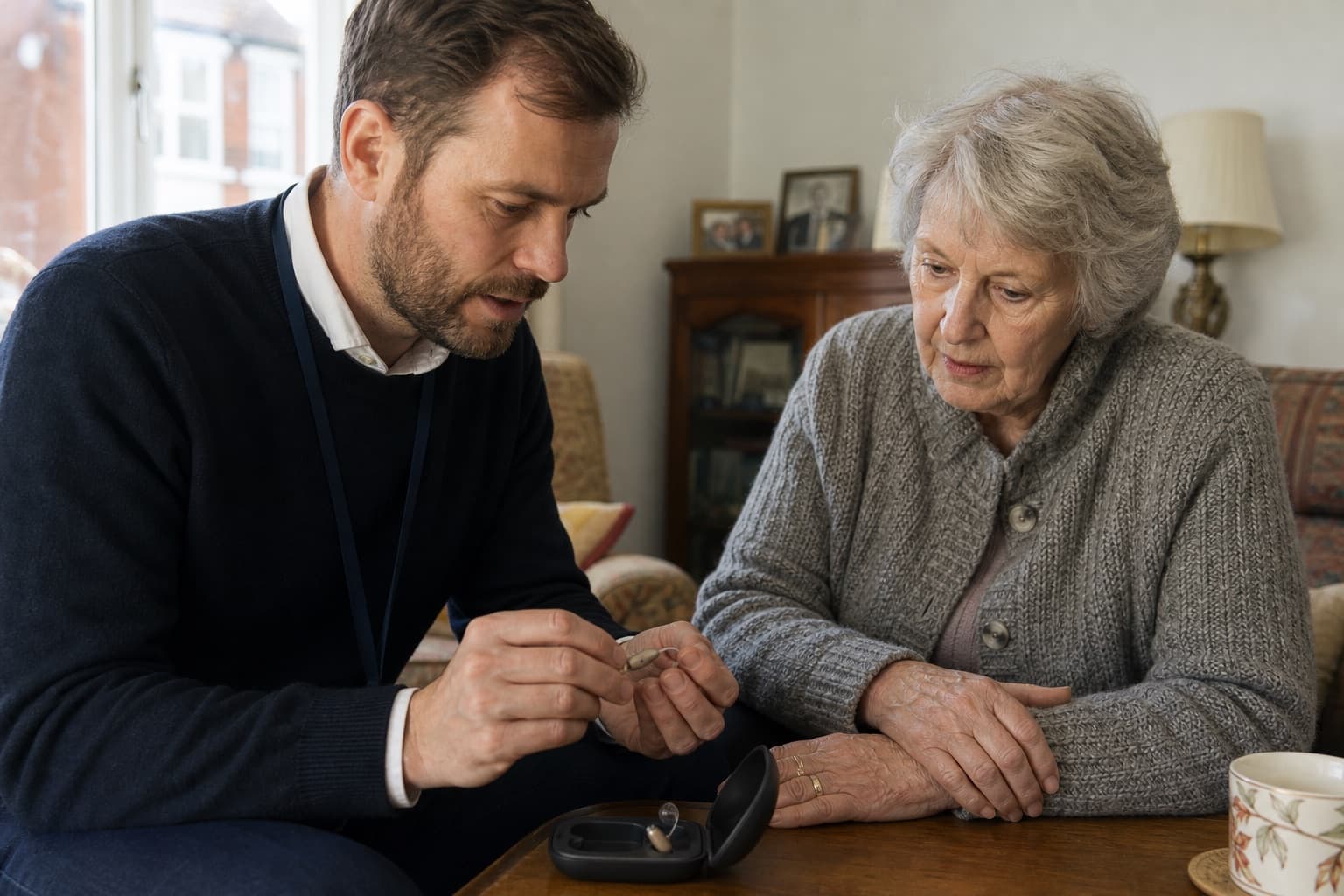
Hearing aids usually remain useful for several years, but there is no reliable expiry date that applies to every device or wearer. Replace them when they can no longer be made reliable and suitable for your current hearing and listening needs, not simply because a certain number of years has passed.
The useful lifespan depends on the device's physical condition, battery performance, repair history, current prescription, fit, available manufacturer support and whether it still provides meaningful benefit in daily life. A three-year-old aid with repeated faults may be a worse prospect than an older aid that remains reliable and repairable.
What does hearing-aid lifespan actually mean?
There are three different lifespans to consider:
Physical lifespan
The casing, microphones, receiver, tubing, controls, charger and battery all experience wear. Some components are replaceable. A worn receiver wire or ageing rechargeable cell does not necessarily mean the complete aid has reached the end of its life.
Clinical lifespan
The aid must still have enough fitting capability for the current hearing prescription. Hearing, ear shape, dexterity and health can change while the electronics continue to work. Reassessment and reprogramming may restore benefit if the device still has suitable range.
Practical lifespan
The aids must remain dependable in the situations that matter to the wearer. Poor battery life, repeated repairs, unreliable phone connection or difficulty handling a small control can make an otherwise functioning aid impractical.
The replacement decision should consider all three. Device age alone describes none of them well enough.
What makes hearing aids wear out?
Moisture, wax and the daily environment
Hearing aids sit close to skin and the ear canal, where they encounter perspiration, wax, cosmetics, dust and temperature changes. Receiver-in-canal devices place the receiver close to wax and moisture. Behind-the-ear aids separate the main electronics from the canal but still have tubing, moulds or earpieces that wear.
Regular care reduces avoidable faults, but it cannot prevent all component ageing. Follow the hearing-aid cleaning and maintenance guide for model-specific, safe checks.
Handling and physical fit
Drops, pets, loose storage and pulling a receiver wire can shorten device life. Domes, tubes, moulds and receivers can also loosen or harden with use. If an aid becomes uncomfortable or falls out, the right answer may be a new coupling or mould rather than a new hearing aid.
Rechargeable battery ageing
Rechargeable cells gradually lose capacity. The hearing aid may still perform correctly but stop lasting through the required day. Streaming, high-power settings and difficult wireless conditions can increase daily power use, so reduced runtime is not proof of battery failure by itself.
Ask whether the battery is serviceable, what diagnostic information is available and whether battery service is covered. Manufacturer claims are model-specific. For example, Phonak states that rechargeable batteries in specified current products are tested for a six-year service period, but that must not be applied to every brand, model or pattern of use.
Manufacturer parts and software support
Warranty expiry does not automatically make an aid obsolete. However, repair may eventually become impossible if receivers, chargers, replacement casings, programming software or manufacturer service are no longer supported.
Ask the provider whether the exact model remains repairable and whether compatible accessories are still available. A vague statement that the technology is “old” is not enough.
What are the warning signs that an aid needs attention?
Common signs include:
- Weak, intermittent or distorted sound.
- Persistent feedback after correct insertion.
- A battery or charge that no longer covers the required day.
- Cracked tubing, casing, receiver wire, mould or dome.
- Repeated charging or connectivity failures.
- A fit that has become loose, sore or difficult to manage.
- Increasing repair frequency.
- Listening difficulties despite apparently normal device operation.
These signs justify investigation, not automatic replacement. Wax protection, batteries, receivers, tubing, fit and programming can create similar symptoms.
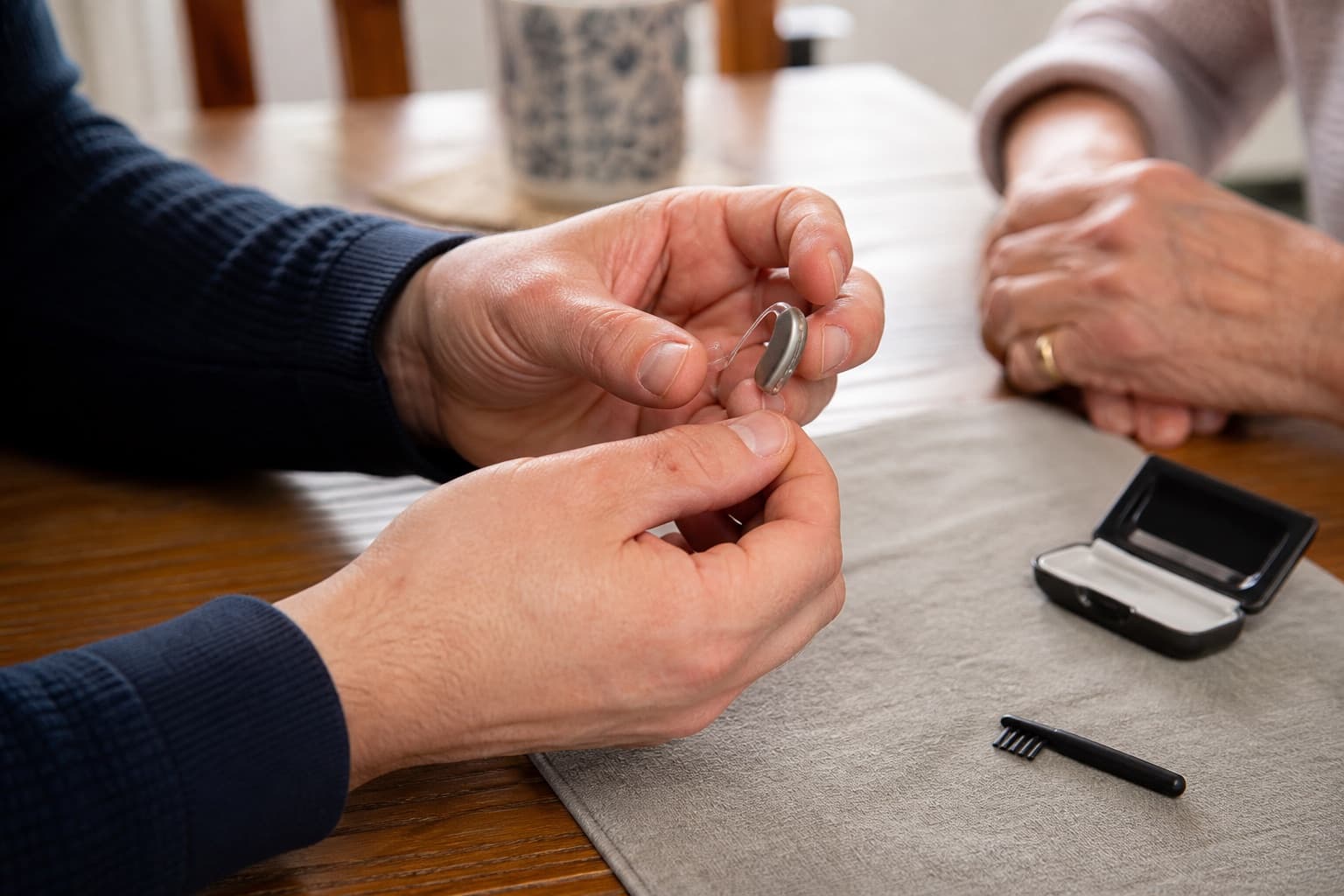
A worn receiver, tube, mould or battery may be repairable even when the main hearing aid remains suitable.
Should you keep, repair or replace hearing aids?
Use the same decision order every time: check the hearing and ears, identify the device fault, confirm repair support, then compare replacement only if the existing aids cannot meet the need reliably.
Keep, repair or replace?
Start with the current hearing, device condition and real listening results. The oldest aid is not automatically the one that should be replaced.
Keep and adjust
The aids are reliable, repairable and still suitable for your hearing.
- Comfortable and secure fit
- Useful battery life
- Current hearing remains inside the fitting range
- Fine-tuning can address the listening problem
Next stepReassess hearing, update settings and continue routine care.
Repair or service
A specific fault is limiting otherwise suitable hearing aids.
- Blocked or damaged receiver, tube or mould
- Rechargeable battery no longer lasts the day
- Intermittent sound or charging
- Repair parts and programming support remain available
Next stepGet a written repair estimate and compare the likely useful life afterwards.
Consider replacement
The existing aids cannot reliably meet an important current need.
- Repeated faults or uneconomic repairs
- Hearing has moved outside the fitting capability
- Manufacturer support or essential parts have ended
- A required feature cannot be added or supported
Next stepCompare the measurable benefit, complete price, warranty and aftercare before changing.
A replacement recommendation should explain what the new aids will improve, which limitations remain and why adjustment or repair is not the better option.
If repair is proposed, ask:
- Which component has failed?
- Is the repair guaranteed, and for how long?
- Are both aids likely to remain compatible after repair?
- What battery performance and reliability should be expected afterwards?
- Is a suitable loan aid available?
- What would make replacement more sensible than repair?
If replacement is proposed, ask for the exact functional difference. “Newer technology” is not a measurable outcome. A useful explanation links the recommendation to speech understanding, listening effort, handling, battery duration, connectivity or another agreed need.
When is a repair no longer good value?
There is no universal repair-cost threshold. A repair can still be sensible for an older aid if the device suits the prescription, has been reliable, remains supported and the likely service life afterwards justifies the cost.
Replacement becomes easier to justify when several problems occur together:
- Repairs are frequent or the same fault keeps returning.
- The quoted repair is high relative to the likely remaining usefulness.
- Important parts or manufacturer support are ending.
- The rechargeable battery and another major component both need service.
- Hearing has changed beyond the aid's suitable fitting range.
- A key current need cannot be met by adjustment or an accessory.
Compare complete costs. A replacement quote should include the fitting, verification, follow-ups, warranty, accessories and aftercare, not only the device price.
Can hearing changes make working aids unsuitable?
Yes. A device can switch on, connect and produce sound while no longer being right for the current prescription or listening goals. Hearing can change gradually enough that the wearer adapts without immediately noticing.
NICE recommends systems for regular reassessment of hearing needs and devices. A review should consider current hearing results, comfort, sound quality, volume, cleaning, battery life, telephone use and progress towards personal listening goals.

Recheck hearing, fit, settings and listening goals before assuming that device age is the cause of a problem.
Hear Better includes a free hearing test every 12 months with the aftercare for aids it supplies. This allows the prescription, fit and performance to be reviewed before age is used as a reason to replace them.
Should you replace working aids for newer technology?
Only if the newer option solves an important real problem strongly enough to justify the complete cost and refitting process.
A newer product may offer different connectivity, rechargeable performance, form factor, remote microphone compatibility or signal processing. None of those features guarantees better everyday results for every person. The benefit depends on the hearing prescription, ears, dexterity, phone, listening environments and how well the aids are fitted.
Before changing, agree what will be tested:
- Conversation with a partner at home.
- Speech in a café or family gathering.
- Television at a comfortable shared volume.
- Phone calls or streaming with the actual phone.
- Comfort across a full day.
- Charging or battery performance.
- Handling, insertion and cleaning.
A trial or evaluation is more meaningful when success is defined before it begins.
How do warranty and aftercare affect useful life?
A manufacturer warranty covers specified product faults for a stated period. Aftercare covers the clinical and practical relationship around the aids. They are not the same.
Good aftercare can extend useful life by identifying a fit, programming, maintenance or receiver problem before a replacement is considered. It also gives the wearer somewhere to return when hearing, health, phone technology or listening needs change.
Hear Better's aftercare for hearing aids it supplies includes:
- A free hearing test every 12 months.
- Unlimited service call-outs to help keep the aids working.
- Advice by phone or email.
- Support for the lifetime of the aids, including after the manufacturer warranty ends.
Manufacturer repairs, replacement parts, consumables, loss and accidental damage remain subject to the applicable written terms. Read the guide to hearing-aid trials, warranties and aftercare before comparing providers.
How can you help hearing aids last longer?
- Wipe and inspect them daily using the correct method.
- Replace only the filters, domes, tubes or batteries you have been shown how to change.
- Keep the electronic devices dry and away from direct heat.
- Use a protective case when they are not being worn.
- Keep sprays, cosmetics and household cleaners away.
- Report intermittent faults before complete failure.
- Have changes in fit, hearing or listening ability reviewed.
- Keep invoices, model details, serial numbers, warranty terms and repair history.
Maintenance cannot guarantee a particular lifespan, but it reduces avoidable damage and creates a clearer history when repair or replacement is considered.
Frequently asked questions
How many years should hearing aids last?
There is no fixed number that applies to every hearing aid. Many remain useful for several years. The right endpoint depends on reliability, repairability, battery performance, current hearing, fit, manufacturer support and whether the aids still meet everyday needs.
Do hearing aids need replacing every three or five years?
No automatic replacement rule applies simply because a device reaches a particular age. That age can be a sensible time for a thorough review, but working, suitable and supported aids do not become clinically wrong on their birthday.
How long do rechargeable hearing-aid batteries last?
Capacity gradually reduces and the service expectation varies by manufacturer and model. Judge the battery by whether it reliably covers the required day and by any diagnostic information available. Ask whether the battery can be serviced and what the written warranty covers.
Is it worth repairing old hearing aids?
It can be. Repair may offer good value if the aids still suit the prescription, the fault is identifiable, parts remain available and the expected useful life afterwards justifies the cost. Compare the written estimate with the complete cost and expected benefit of replacement.
How do I know whether my hearing aids need reprogramming?
Arrange a review if speech has become unclear, settings no longer feel balanced, listening situations have changed or hearing seems different. The provider should check the ears, current hearing, fit and device before deciding whether reprogramming is appropriate.
Which hearing aids have the longest warranty and strongest aftercare?
Warranty length and aftercare vary by manufacturer, model and provider. A long warranty is not automatically the strongest overall package. Compare cover for aids, chargers, receivers and batteries, exclusions, repair handling, loan aids, follow-ups, adjustments and support after warranty expiry.
Does Hear Better replace hearing aids bought elsewhere?
Hear Better can provide a free adult hearing assessment and discuss suitable independent private options. Ongoing lifetime aftercare applies to hearing aids supplied by Hear Better. For repairs or support on devices bought elsewhere, contact the original provider first because they hold the fitting and warranty history.