
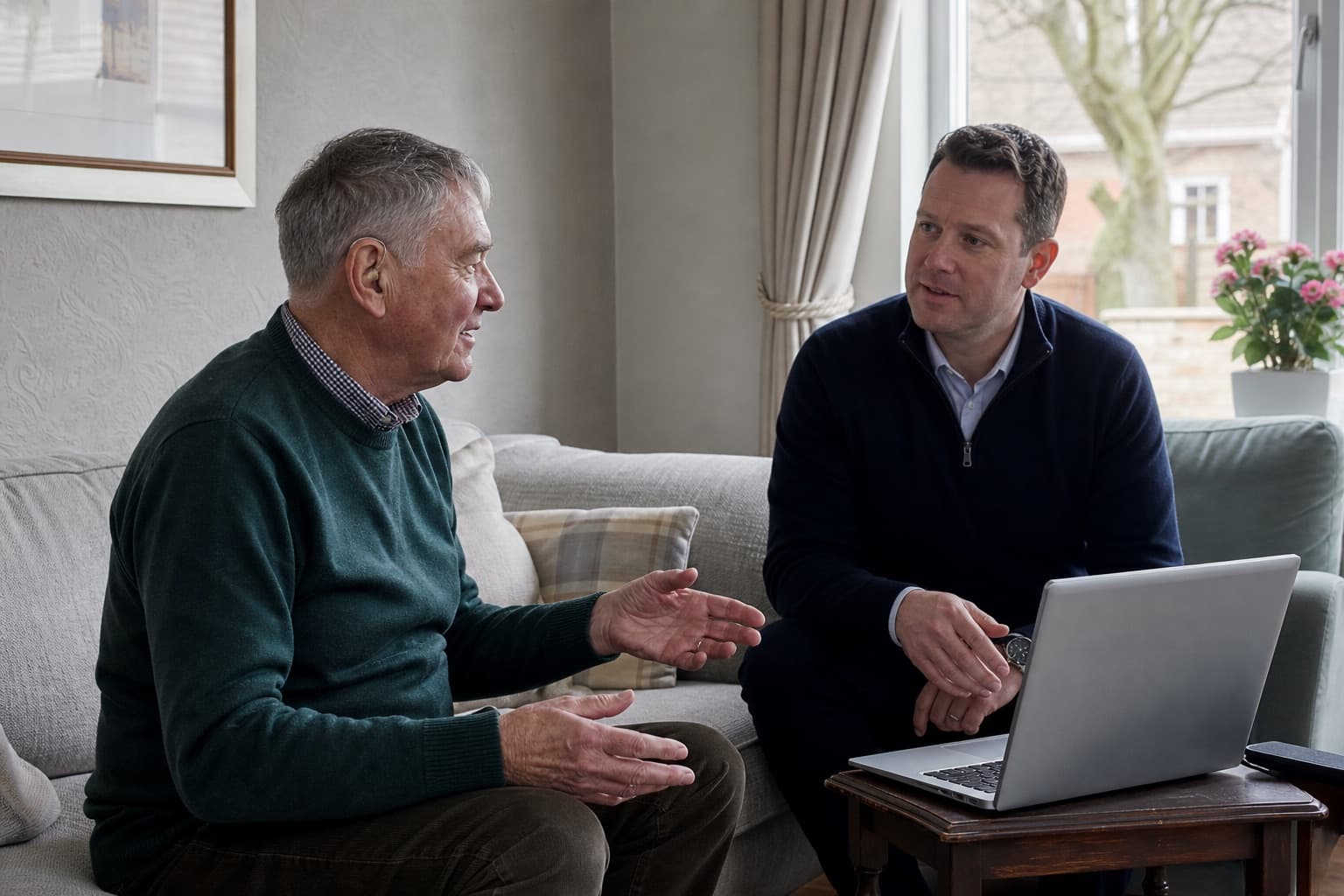
A hearing-aid fitting is the appointment where your new aids are physically fitted, programmed for your hearing, checked, explained and prepared for daily use. It is not simply a product handover. You should leave knowing how to use the aids and how to get help if real-life listening shows that they need fine-tuning.
If you are still deciding what to buy, start with Hear Better's independent hearing-aid service and manufacturer range. The right fitting begins with the right prescription and device choice, not with a generic setting copied across users.
Most fitting appointments take around 30 to 60 minutes, although two aids, custom moulds, phone pairing or extra handling practice can take longer. A good appointment should not feel rushed.
What happens at a hearing-aid fitting?
The audiologist should connect your hearing-test results with the places and conversations you want to improve. That normally means checking the plan, fitting the devices comfortably, programming them, verifying the response, teaching you to use them and arranging follow-up.
The six parts of a proper hearing-aid fitting
The fitting is both technical and practical. Programming matters, but so do comfort, confidence and a clear route back for fine-tuning.
- 01
Confirm the plan
Review your hearing results, listening priorities and the model being fitted.
- 02
Check the physical fit
Make sure each aid is secure, comfortable and compatible with glasses or dexterity needs.
- 03
Programme the aids
Apply an individual prescription, then configure useful controls and listening features.
- 04
Verify the response
Check that the sound delivered at the ear is appropriate, then fine-tune where needed.
- 05
Practise daily use
Insert, remove, charge, clean and operate the aids yourself before the appointment ends.
- 06
Plan the review
Agree what to try at home, what to record and how to get help or adjustments.
The exact order can vary. What matters is that the technical checks and your own experience are both taken seriously.
What happens before the hearing aids go in?
The fitting normally follows a full hearing assessment. Before starting, the audiologist should confirm:
- your current hearing results and ear health
- whether one aid or two is being fitted
- the agreed model, style and technology level
- the conversations and environments you most want to improve
- whether glasses, eyesight or dexterity affect handling
- the price, trial or cancellation terms, warranty and aftercare
Your ears may be checked again before a dome, receiver, tube or mould is inserted. Wax, soreness or a change in ear health can affect whether the fitting can proceed safely.
If you have not yet had an assessment, Hear Better offers a free adult hearing test at home across the North East with no obligation to buy.
How is the physical fit checked?
A hearing aid should sit securely without pinching, rubbing or creating painful pressure. The clinician checks the length and position of the receiver or tube, the dome or mould seal, retention and the space around glasses.
Physical fit affects more than comfort. It can change available amplification, sound quality, feedback and how likely you are to wear the aids consistently. Tell the audiologist immediately if an aid feels unstable or sore. A different dome, receiver length, retention piece or mould adjustment may solve the problem.
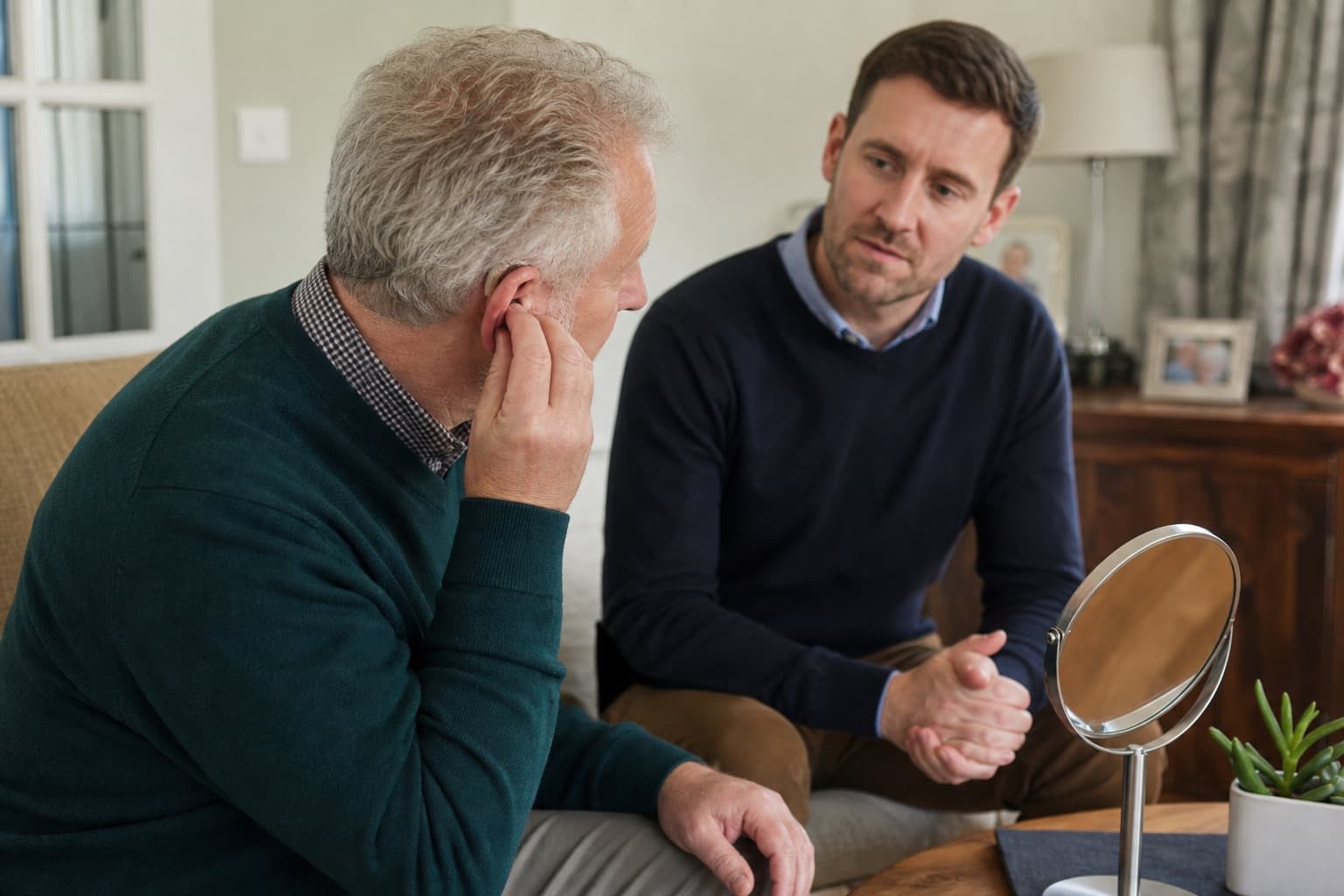
A fitting should leave you able to insert, remove and operate the aids confidently, not just having watched a demonstration.
You should practise inserting and removing each aid yourself. Watching the clinician do it is useful, but confidence comes from handling the exact devices you are taking home.
How are hearing aids programmed for you?
Prescription hearing aids are connected to specialist fitting software. Your hearing-test results are used with a recognised prescription formula to calculate a starting target across different pitches and input levels.
This is why hearing aids are not simply turned up by one amount. They may provide more help for soft speech sounds, less for louder sound and different support at different frequencies. The clinician can also configure features such as directional microphones, noise reduction, programs, volume controls and alerts.
The first software calculation is a starting point. It should then be checked and, where appropriate, fine-tuned for comfort and your listening goals.
What is hearing-aid verification?
Programming tells the hearing aid what to do. Verification checks what sound is actually being delivered at the ear. The shape and acoustics of each ear canal differ, so the manufacturer's first-fit software alone does not show the complete result in your ear.
Probe-microphone or real-ear measurement uses a very thin tube placed in the ear canal while calibrated sounds are played. The clinician measures the hearing aid's response and compares it with the prescription target. The British Society of Audiology describes probe-microphone measurement as a starting point for fitting that should be combined with patient feedback and clinical judgement.
It is reasonable to ask a provider:
- Which prescription target is being used?
- How will the fitting be verified?
- How will the result be adjusted if sound is uncomfortable or a listening goal is not met?
A target match does not guarantee perfect hearing in every setting. It shows whether the device is delivering an appropriate prescribed response, which can then be considered alongside comfort and real-world benefit.
What will you learn before leaving?
The practical part of the fitting should cover the tasks you need every day:
- telling the right aid from the left
- inserting and removing each aid
- switching on, charging or changing batteries
- understanding controls, programs and warning tones
- cleaning the parts you can safely maintain at home
- storing the aids and protecting them from moisture
- knowing who to contact for supplies, repairs or adjustments
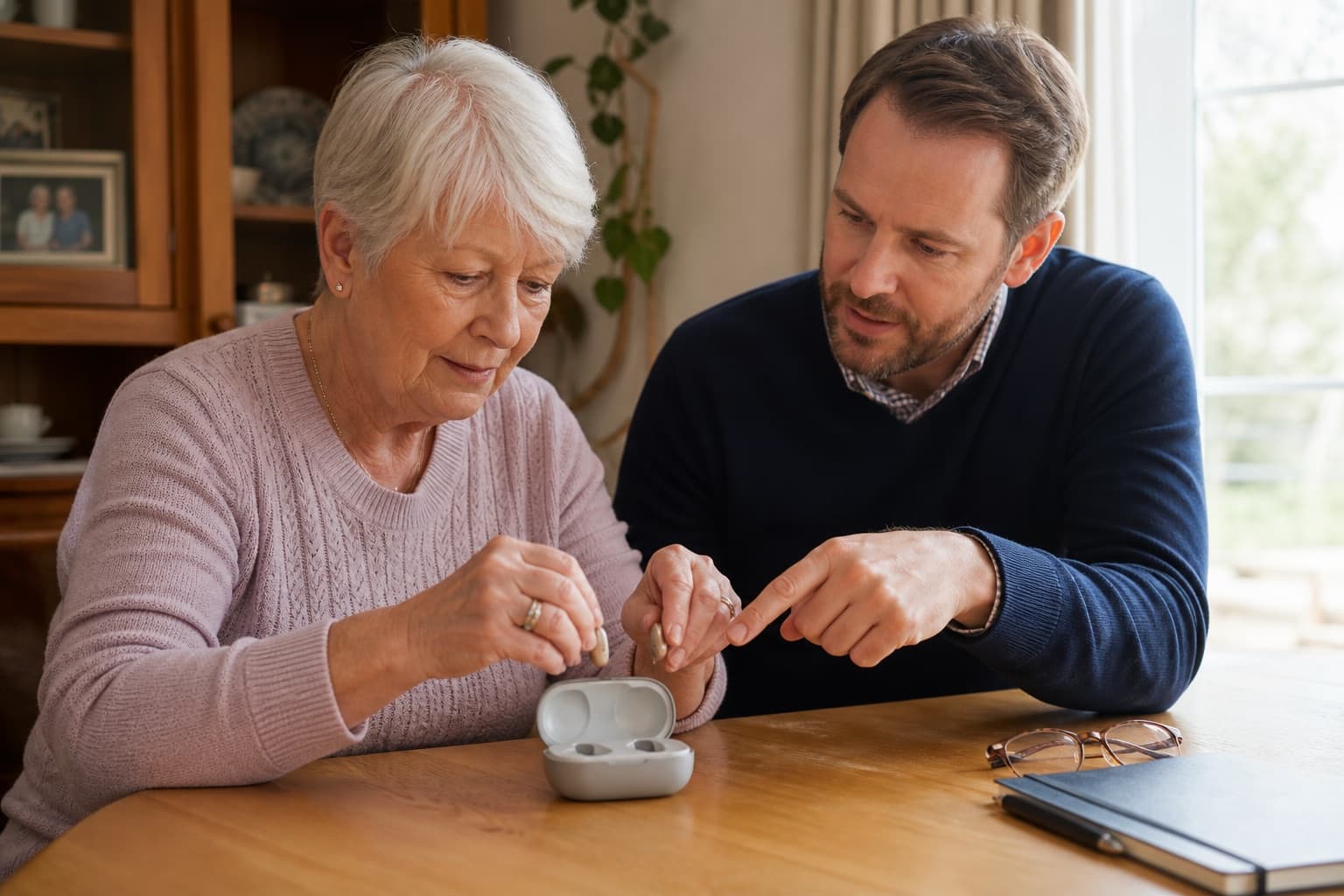
Charging, cleaning and controls should be practised with the exact aids and accessories you will use at home.
If small controls are difficult, say so. The solution might be an app, automatic program, larger charger, different dome or a more manageable style. Our hearing-aid care and maintenance guide covers the home routine in more detail.
Will a phone or television be connected?
If connectivity is part of your chosen system, the appointment may include pairing a compatible phone, installing the manufacturer's app and testing calls or streaming. A television may need a separate accessory.
Compatibility varies by hearing-aid model, phone model and operating system. Direct streaming, hands-free calling and app controls are not identical on every iPhone or Android device. Bring the phone you actually use and ask what your exact combination supports.
You do not have to use an app. The important point is that you can operate the aids in a way that suits you.
Will hearing aids sound natural immediately?
New hearing aids often sound different at first. Hearing loss may have reduced access to some speech sounds and quiet everyday noises for years. Footsteps, running water, paper, birdsong or your own voice can therefore seem unusually noticeable when access is restored.
That adjustment is not a reason to tolerate pain or sound that is uncomfortably loud.
What to notice, and what not to tolerate
Often part of adapting
- Your own voice sounds different
- Quiet household sounds are noticeable again
- Busy places feel tiring at first
Ask for an adjustment
- Speech stays unclear in an important setting
- One side feels noticeably louder
- Persistent whistling or an insecure fit
Contact the provider promptly
- Pain, rubbing or a sore ear
- Sound is uncomfortably loud
- You cannot insert, charge or operate an aid
Adaptation should be supported, not endured. Specific examples from real conversations give the audiologist better information for fine-tuning.
Describe problems precisely. “Cutlery is painfully sharp” or “I can hear one person at home but lose speech at the family table” gives the audiologist more useful information than “they do not sound right”.
What should you try after the fitting?
Use the aids in the situations that matter to you, not only in a quiet room. A short listening record can help:
- Note the place and who was speaking.
- Record what improved and what remained difficult.
- Note comfort, volume, feedback and how long the aids were worn.
- Bring two or three specific examples to the review.
The goal is not to make every sound loud. It is to improve useful access to speech and everyday sound while keeping the fitting comfortable enough to wear consistently.
When is the follow-up appointment?
NICE guidance for adult hearing loss recommends offering a follow-up 6 to 12 weeks after fitting, with a remote option if preferred. The review should cover concerns, insertion and maintenance, comfort, sound quality, volume, phone use, assistive devices and progress towards the agreed goals.
Your provider may also offer an earlier check. Contact them sooner if there is soreness, uncomfortable sound, persistent feedback, unreliable charging or a problem that prevents regular use.
The fitting is the beginning of the result, not the end of the service. Our guide to hearing-aid trials, warranties and aftercare explains what should be confirmed in writing.
What should you take to the appointment?
Have these available:
- the phone or tablet you want to connect
- your glasses, because the arms share space behind the ear
- any supplied charger, remote microphone or TV accessory
- a family member or friend, if their support would help
- examples of difficult conversations and any questions
At a home fitting, the clinician can explain the aids in the room where you normally talk, watch television or use the phone. This does not replace formal verification, but it makes practice immediately relevant.
How Hear Better fits hearing aids at home
Hear Better provides assessment, hearing-aid fitting and ongoing support in patients' homes across the North East service area. Liam Robson is an HCPC-registered hearing aid dispenser, registration HAD03779.
Because Hear Better is independent, recommendations can be made from major hearing-aid manufacturers rather than one restricted range. The service includes home fitting, advice by phone or email, unlimited service call-outs to help keep the aids working and a free hearing test every 12 months for the lifetime of the aids. Repairs, replacement parts, loss and accidental damage remain subject to the applicable written terms.
You can explore hearing aids fitted at home across the North East, including local information for Newcastle, Sunderland and Durham.
Frequently asked questions
How long does a hearing-aid fitting take?
Allow around 30 to 60 minutes in many cases. Two aids, custom moulds, phone pairing, accessories or extra handling practice can take longer. The appointment should leave enough time for questions and practical use.
Are hearing aids programmed individually?
Yes. Prescription hearing aids should be programmed from your hearing results, then checked and adjusted for the fitting and your needs. The same model can have very different settings for two people.
Should a hearing-aid fitting hurt?
No. The aid may feel unfamiliar, but it should not cause pain or excessive pressure. Tell the clinician if it pinches, rubs or feels unstable so the physical fitting can be reviewed.
What is real-ear measurement?
Real-ear measurement is a verification method. A thin probe tube measures the sound produced by the hearing aid in your ear and allows the clinician to compare it with a prescription target.
Why does my own voice sound strange?
The seal in the ear and restored access to sound can change how your voice is perceived. It may settle as you adapt, but a boomy, blocked or uncomfortable voice should be reported because the physical fit or programming may need adjustment.
Can a hearing-aid fitting happen at home?
Yes. Hear Better assesses, fits and supports private hearing aids in patients' homes across North East England. Portable equipment can be used for programming and fitting checks, with follow-up arranged around the service provided.
When should hearing aids be reviewed after fitting?
NICE recommends offering a follow-up 6 to 12 weeks after fitting. Contact the provider earlier if the aids cause pain, sound uncomfortably loud, whistle persistently or cannot be used reliably.