
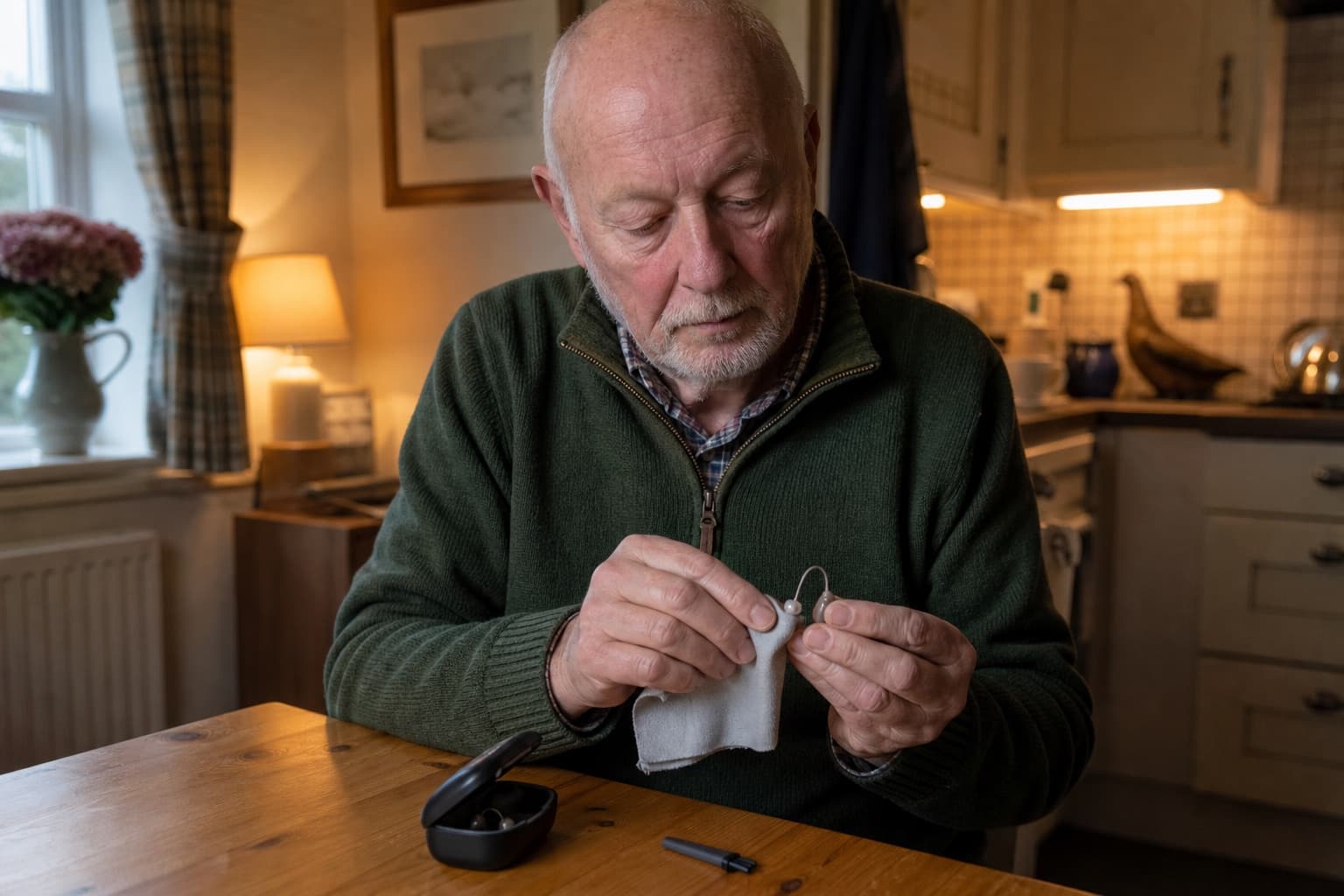
Clean hearing aids every day by wiping the electronic device with a clean, dry cloth, checking the earpiece and wax filter, and storing the aids somewhere safe and dry. Use only the tools and replacement parts recommended for your exact model. The hearing aid body must not be washed, immersed or sprayed.
The important detail is that not every part is cleaned in the same way. Some detachable earmoulds or tubes can be cleaned separately, but they must be completely dry before being reconnected. Receiver-in-canal aids, domes, wax filters, thin tubes and custom moulds all have different maintenance instructions.
What should you do every day?
A short, repeatable evening routine is usually more useful than an occasional deep clean. Work over a table or soft cloth so a small device or filter is less likely to be lost if it slips from your hand.
A simple hearing-aid care routine
Follow the same order every day so small blockages or damage are noticed before they become bigger problems.
- 01
Look
Check the casing, earpiece, receiver and tubing for wax, moisture or visible damage.
- 02
Wipe
Use a clean, dry cloth on the hearing aid itself and the tool recommended for your exact earpiece.
- 03
Clear
Check the wax filter or sound outlet. Replace only the parts you have been shown how to change.
- 04
Power
Charge rechargeable aids, or open the battery door on disposable-battery models when appropriate.
- 05
Store
Leave the aids somewhere safe, dry and cool, away from bathrooms, pets, children and direct heat.
Clean hands matter too. Handle the aids after applying hairspray, perfume, moisturiser or other products, not while those products are still wet. Do not sleep in your hearing aids unless your clinician and the manufacturer have given a specific reason to do so.
How do you clean each part of a hearing aid?
Start by identifying the style and the parts you have actually been shown how to remove. If you are unsure whether a component is a wax filter, receiver, tube, dome or mould, stop and ask your provider. Forcing a tiny part in the wrong direction can turn a simple blockage into a repair.
The device and earpiece are not cleaned alike
The hearing aid body
Wipe daily
Use a clean, dry, lint-free cloth. Keep liquids, sprays and sharp tools away from microphones, seams and charging contacts.
Dome or earpiece
Check daily
Wipe away visible wax using the method supplied for your model. Replace a removable dome rather than refitting a used one if your instructions say it is single-use.
Wax filter
Check when sound weakens
Replace a blocked filter using the correct tool and matching replacement. Ask for a demonstration if dexterity or vision makes this difficult.
Earmould and tubing
Inspect daily
Some detachable earmoulds and tubes can be washed separately, then dried fully before reconnection. The electronic hearing aid must stay dry.
Cleaning a receiver-in-canal hearing aid
Wipe the casing, receiver wire and outside of the dome or mould gently. Check the sound outlet and wax filter. If the filter is blocked, replace it with the correct filter and tool for that receiver. Do not insert a pin, cotton bud or cleaning wire into the receiver opening.
The dome may be replaceable, but fitting varies. Some guidance treats a removed dome as a new-part replacement rather than something to remove, wash and refit. Follow the instructions for the exact coupling supplied with your aids.
Cleaning a behind-the-ear aid with an earmould
The electronic hearing aid sits behind the ear and must remain dry. The separate earmould and its tubing may be washable if the manufacturer or audiology service has shown you how to detach them. Wash only the detached parts, clear moisture from the tube and allow everything to dry completely before reconnection.
Cleaning a thin-tube hearing aid
Thin tubes can become blocked with wax or moisture. Some are designed to be detached and cleared with a specific threader. Others use different couplings or receivers and should not be treated the same way. Use the tool supplied for the model and never force it through an unfamiliar component.
What should you never use on a hearing aid?
Keep these away from the electronic device unless the manufacturer explicitly supplies or approves them:
- Running water, soaking or steam.
- Alcohol, household cleaner, disinfectant spray or solvent.
- Oils, moisturiser or ear drops on the device.
- Cotton buds, pins, needles or other sharp objects in an opening.
- Compressed air.
- A hairdryer, radiator, oven or direct high heat.
- An ultrasonic jewellery cleaner.
Water resistance is not the same as waterproofing. A stated IP rating describes performance under defined test conditions, not permission to shower or swim in the aids. Check the instructions for the exact model.
How should you look after hearing-aid batteries and chargers?
Rechargeable hearing aids
Place the aids correctly in their charger and follow the manufacturer's charging routine. Many current devices are designed for overnight charging, but charger lights, cleaning cycles and long-term storage instructions differ. Keep the charger dry, ventilated and away from direct heat.
Wipe visible dirt from charging contacts only as directed. If an aid repeatedly fails to charge, check that it is seated correctly and that the charger has power. Do not scrape the contacts or insert liquid cleaner.
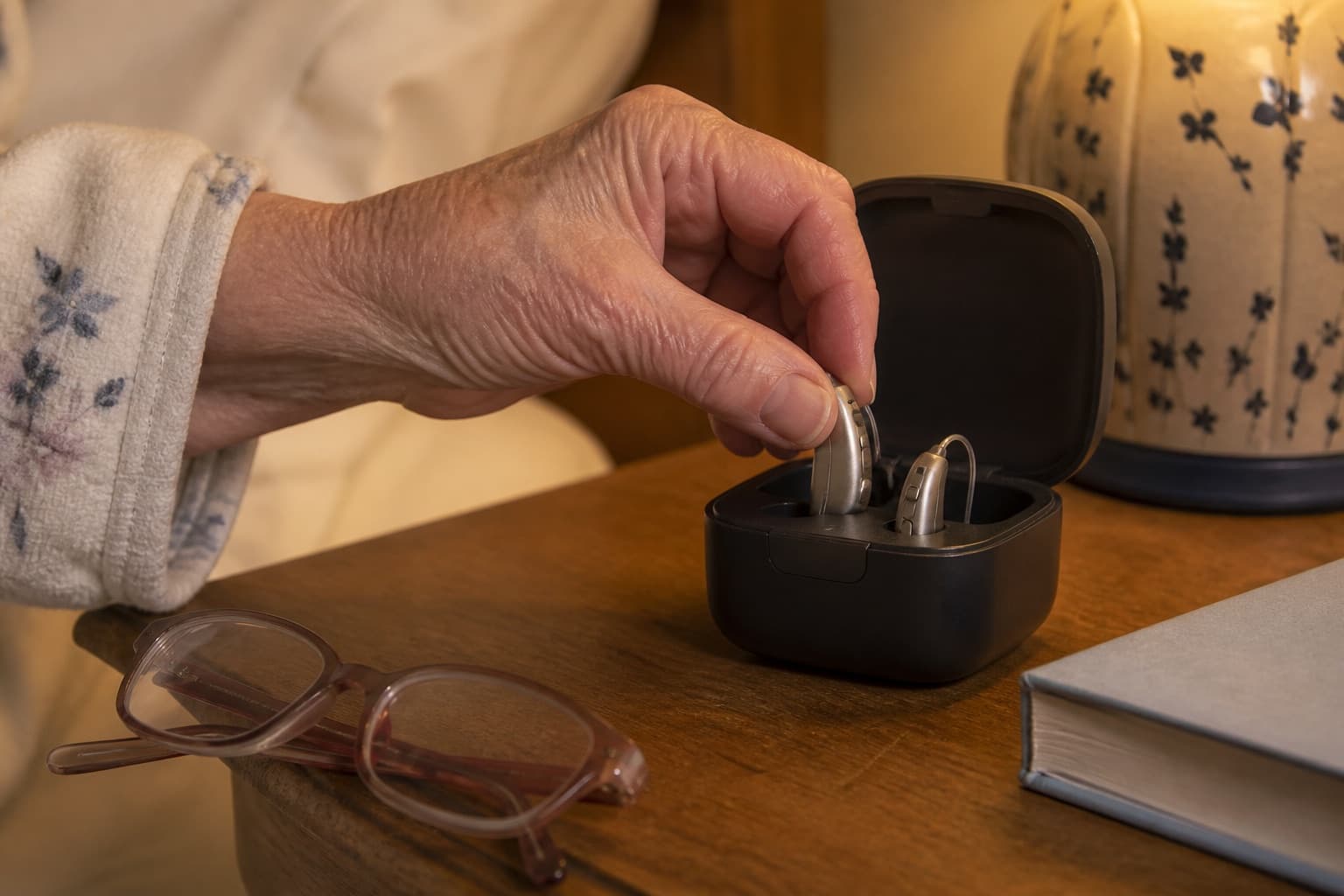
Charge rechargeable aids as directed for your model and keep the charger somewhere cool, dry and easy to reach.
Disposable zinc-air batteries
Remove the adhesive tab only when the battery is needed. Air activates the battery, and replacing the tab afterwards does not stop that process. Phonak's battery guidance advises allowing approximately two minutes after tab removal before closing the compartment, but instructions can vary, so use the guidance supplied for your aid and battery.
Store unused batteries in their packaging at room temperature. Keep loose batteries away from coins, keys, children and pets. Button batteries can cause severe injury if swallowed, so seek urgent medical help if ingestion is suspected.
Read our comparison of rechargeable and disposable-battery hearing aids if you are choosing between power systems.
How should hearing aids be stored and protected from moisture?
When the aids are not being worn, place them in their case, charger or drying system as instructed. Choose a cool, dry location rather than a bathroom, sunny windowsill, radiator or car dashboard. Keep the aids beyond the reach of children and pets.
A drying pot or electronic drying system may help where moisture is a recurring problem, but confirm that it is suitable for rechargeable batteries and your exact model. Do not put rechargeable aids into an unsuitable heated dryer.
What should you do if a hearing aid gets wet?
Remove it from the water and dry the exterior gently. For a disposable-battery model, open the battery door and remove the battery if it is safe to do so. Do not charge a wet rechargeable aid and do not apply direct heat.
Place the aid in the drying system recommended by your provider and contact them if performance is affected. Salt water, detergent and other liquids can cause more damage than clean water, even if the device appears to work initially.
What can you check when a hearing aid stops working?
Many apparent faults are caused by power, wax, moisture or fit. Work through simple checks in order instead of changing several parts at once. That makes it easier to identify what solved the problem.
What to check when a hearing aid is not working
These checks can find common maintenance problems. Stop before dismantling the aid or using an unfamiliar tool.
No sound
- 1Check the aid is switched on
- 2Check or recharge the battery
- 3Inspect the wax filter and sound outlet
- 4Look for a kink or blockage in user-serviceable tubing
Weak or muffled
- 1Check battery or charge level
- 2Replace a blocked wax filter
- 3Look for moisture in detachable tubing
- 4Compare with how you hear without the aids
Whistling
- 1Reinsert the earpiece carefully
- 2Check for split, loose or kinked tubing
- 3Inspect the dome or mould for damage
- 4Arrange an ear check if wax may be contributing
Poor fit or discomfort
- 1Stop if the ear is sore
- 2Check the earpiece is inserted correctly
- 3Look for a worn dome, tube or mould
- 4Ask for a fit review rather than forcing the aid
Still not right? Contact your hearing-aid provider if these checks do not restore normal performance, or if the casing, receiver, mould or tubing is damaged.
Do not assume every change in sound is caused by a dirty hearing aid. A professional check can distinguish a blocked component, damaged receiver, unsuitable fit, change in programming, earwax or a change in hearing.
When should your audiologist check the hearing aids?
Arrange support if:
- Normal sound does not return after safe battery, charging and wax-filter checks.
- Feedback continues after correct insertion.
- The casing, receiver wire, tube, mould or dome is cracked, loose or damaged.
- A charger becomes unusually hot, damaged or unreliable.
- The aids repeatedly collect moisture.
- The fit has become uncomfortable or insecure.
- You cannot manage a maintenance task safely because of vision or dexterity.
- Your hearing or listening ability has changed.
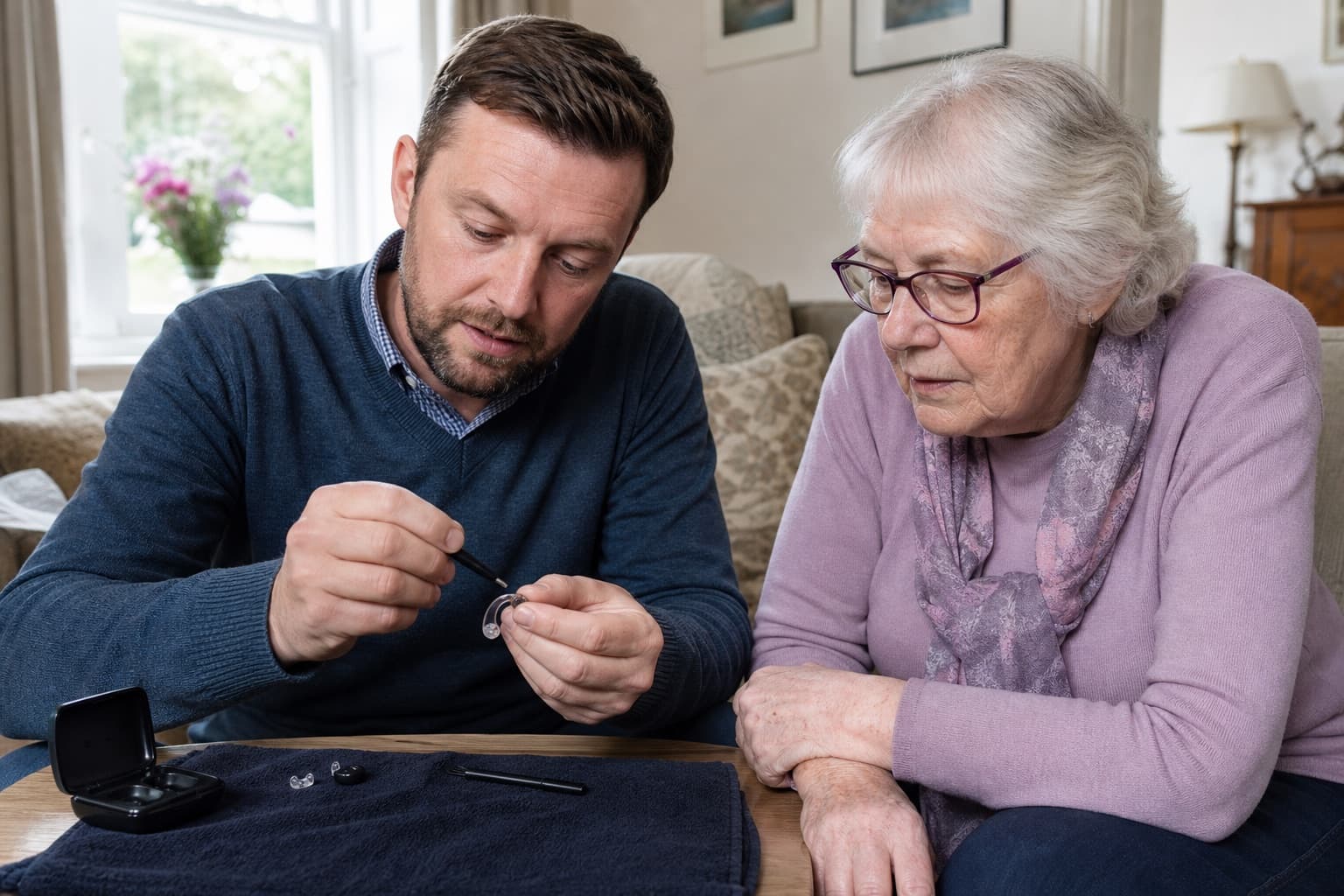
The safest method depends on the device. A practical demonstration is more useful than guessing which small part to remove.
Hear Better's aftercare for hearing aids it supplies includes a free hearing test every 12 months, unlimited service call-outs to help keep the aids working, and advice by phone or email for the lifetime of the aids. Manufacturer repairs, replacement components, consumables, loss and accidental damage remain subject to the applicable written terms.
That ongoing service is one reason to compare more than the device price. Our guide to hearing-aid trials, warranties and aftercare explains what to check in a written quote.
When is a hearing change more than a maintenance problem?
A blocked hearing aid can make sound disappear, but removing the aid gives an important comparison. If hearing has suddenly reduced in one or both ears, or worsened rapidly, do not keep cleaning the device and wait to see what happens.
NICE advises immediate or urgent referral for sudden or rapidly worsening hearing loss depending on when it began. Immediate assessment is also required for new one-sided hearing loss with facial weakness or altered sensation. Ear pain, discharge, recurrent vertigo, pulsatile tinnitus or other significant new symptoms also need appropriate clinical assessment.
If you are unsure whether the problem is the aid, the ear or the hearing itself, contact an appropriate hearing or medical service and describe exactly what changed and when.
Does regular maintenance make hearing aids last longer?
Good care reduces avoidable blockages, moisture exposure and physical damage. It can help the aids remain reliable, but it cannot prevent normal component wear or guarantee a fixed lifespan.
Replacement should not be based on age alone. Consider the device's condition, repair history, battery performance, your current prescription, listening needs and whether the technology still supports you. Read how long hearing aids last for a fuller repair-versus-replacement guide.
Frequently asked questions
How often should hearing aids be cleaned?
Wipe and inspect them every day, ideally when you remove them in the evening. Check the wax filter or sound outlet whenever sound becomes weak. Deeper maintenance depends on the device, earpiece and how much wax or moisture it encounters, so follow the schedule supplied for your model.
What can I use to clean my hearing aids?
Use a clean, dry, lint-free cloth and the brush, filter tool or tube threader recommended for your exact model. Some detached earmoulds and tubes can be cleaned differently, but the electronic hearing aid itself must stay dry.
How often should hearing-aid domes be changed?
There is no single interval for every dome and wearer. Replace a dome if the manufacturer or provider's schedule says it is due, if it is split, loose, hardened or discoloured, or if it no longer fits securely. Use the correct size and type because an unsuitable dome can affect comfort, retention and sound.
How do I know whether a wax filter is blocked?
Weak, muffled or absent sound can be a sign, especially if the battery or charge is good. Inspect the filter under good light and replace it if it is visibly blocked or the model's instructions recommend replacement. If sound does not return, contact the provider rather than repeatedly changing parts.
Can I clean hearing aids with alcohol wipes?
Do not use alcohol or general disinfectant wipes on the hearing aid unless the manufacturer explicitly approves a product and method for that model. Liquids and solvents can damage coatings, openings and electronics.
Should hearing aids be removed at night?
Usually, yes. Removing them protects the devices, allows the ears a break and creates an opportunity to clean and store or charge them safely. Follow specific clinical advice if you have been told to use a device differently.
Can Hear Better clean hearing aids bought elsewhere?
Hear Better is a private mobile audiology and hearing-aid service, not a standalone cleaning service. Ongoing aftercare applies to hearing aids supplied by Hear Better. If another provider supplied your aids, contact them first because they will know the model, fitting and warranty arrangements.
Sources
- Dorset HealthCare NHS: cleaning your hearing aid
- Leeds Teaching Hospitals NHS Trust: common faults with hearing aids
- Cambridge University Hospitals: NHS hearing-aid problem solving
- UCLH: hearing-aid maintenance intervals and appointments
- Phonak: zinc-air hearing-aid battery guidance
- NICE NG98: hearing loss in adults, assessment and referral