
Rechargeable hearing aids are often the easiest option for someone who can place the devices in a charger each night. Replaceable-battery aids may be preferable when immediate battery changes, extended travel or independence from a charger matter more. Neither power source makes a hearing aid sound better by itself.
The correct choice depends on the complete device, your prescription and your routine. Compare power source only after the hearing aid has been shown to be clinically suitable.
Rechargeable and battery hearing aids compared
 Rechargeable
- Usually suits
- An easy nightly charging routine and avoiding tiny batteries
- If power runs out
- Use the correct powered case, power bank or spare charged device
- Travel plan
- Take the charger, cable and a tested backup power option
- Main compromise
- A failed or forgotten charger can leave the aids unusable
 Replaceable battery
- Usually suits
- Immediate battery changes and independence from a charger
- If power runs out
- Insert a fresh battery and continue using the aid
- Travel plan
- Carry enough correct-size batteries and store them safely
- Main compromise
- Small batteries must be handled, stored and replaced regularly
Runtime and charging vary by model, battery age, streaming use and settings. Manufacturer figures should not be treated as a guarantee of what every user will experience.
Which power option suits your routine?
Rechargeable
Usually the easier routine when placing the aids in a charger each night feels straightforward.
Good match if
- Avoiding tiny batteries because of arthritis, tremor or reduced eyesight
- A reliable nightly charging routine
- Regular phone or television streaming, once model-specific runtime is checked
Think about
- A failed or forgotten charger can leave you without working aids
- Travel away from reliable power needs a tested backup plan
- The sealed battery eventually requires professional service
Test before choosing
- Place both aids securely in the charger and remove them again
- Check that you can see or feel when charging has started
- Confirm runtime, portable charging and spare-charger options for the exact model
A severe hearing loss does not automatically determine the power source. The exact aid must provide the required output, runtime and manageable controls.
A larger replaceable-battery aid can still be easier to handle than a very small rechargeable one, and a portable charging case can remove some travel concerns. The complete device should be handled and tested before the power source is chosen.
Advantages of rechargeable hearing aids
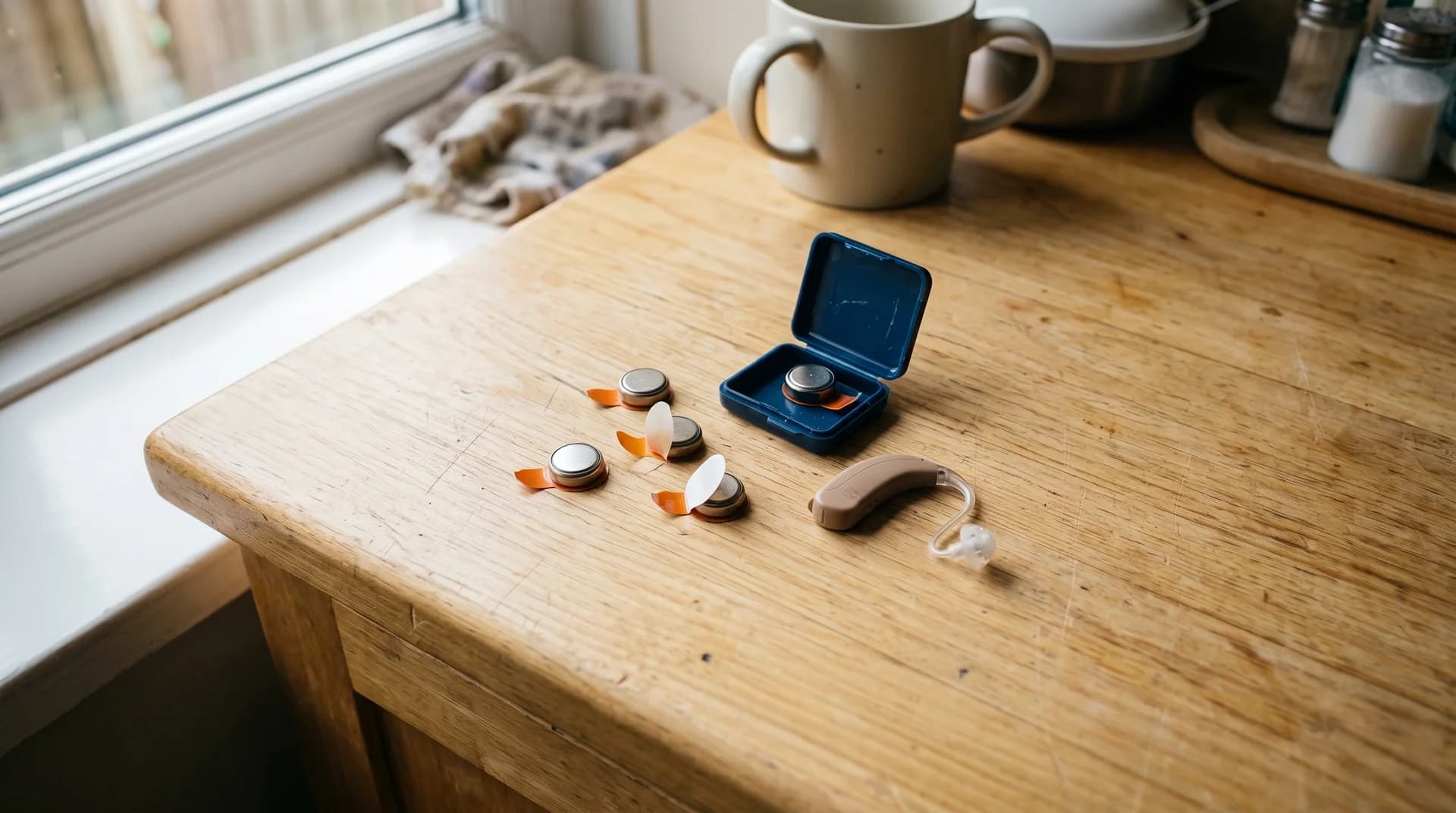
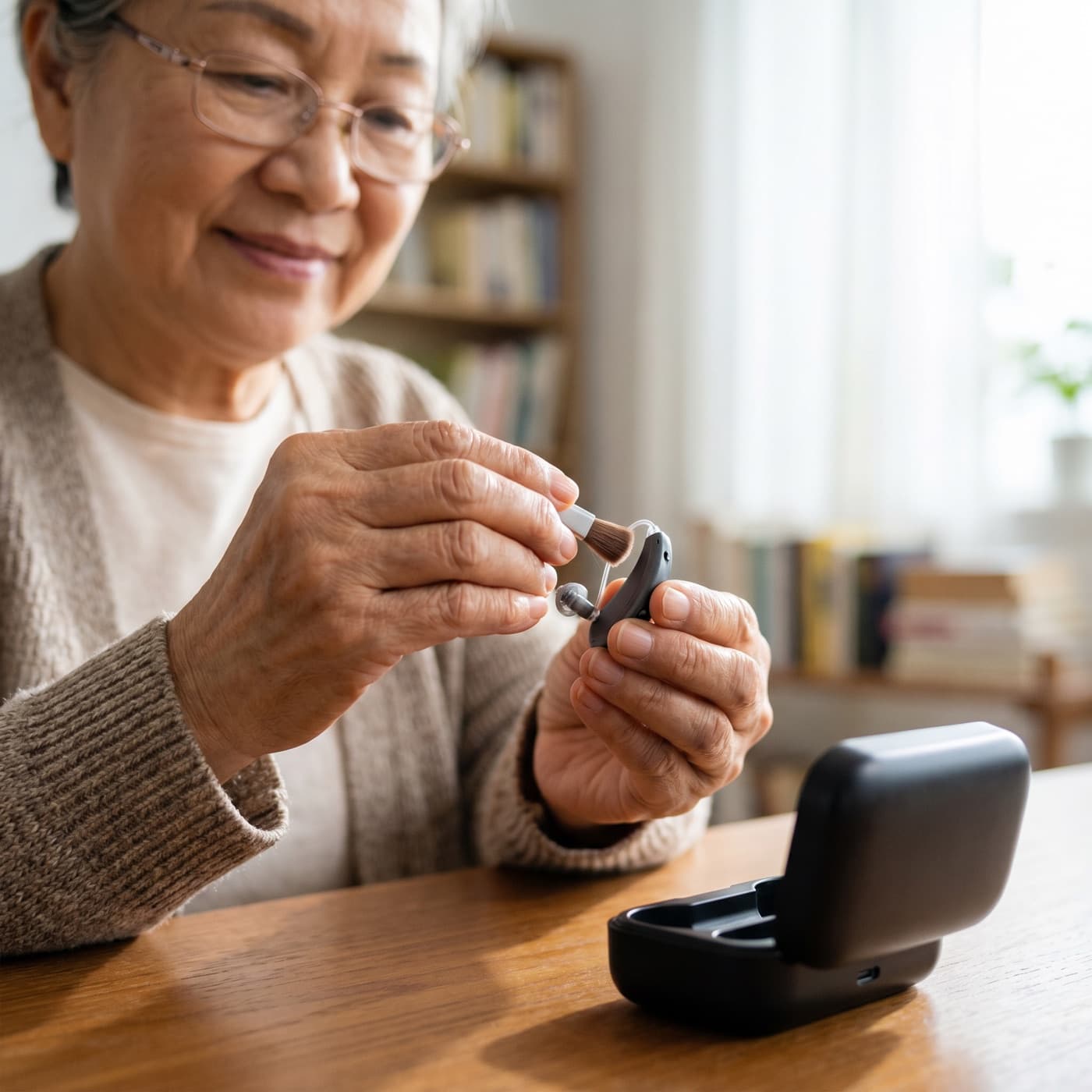
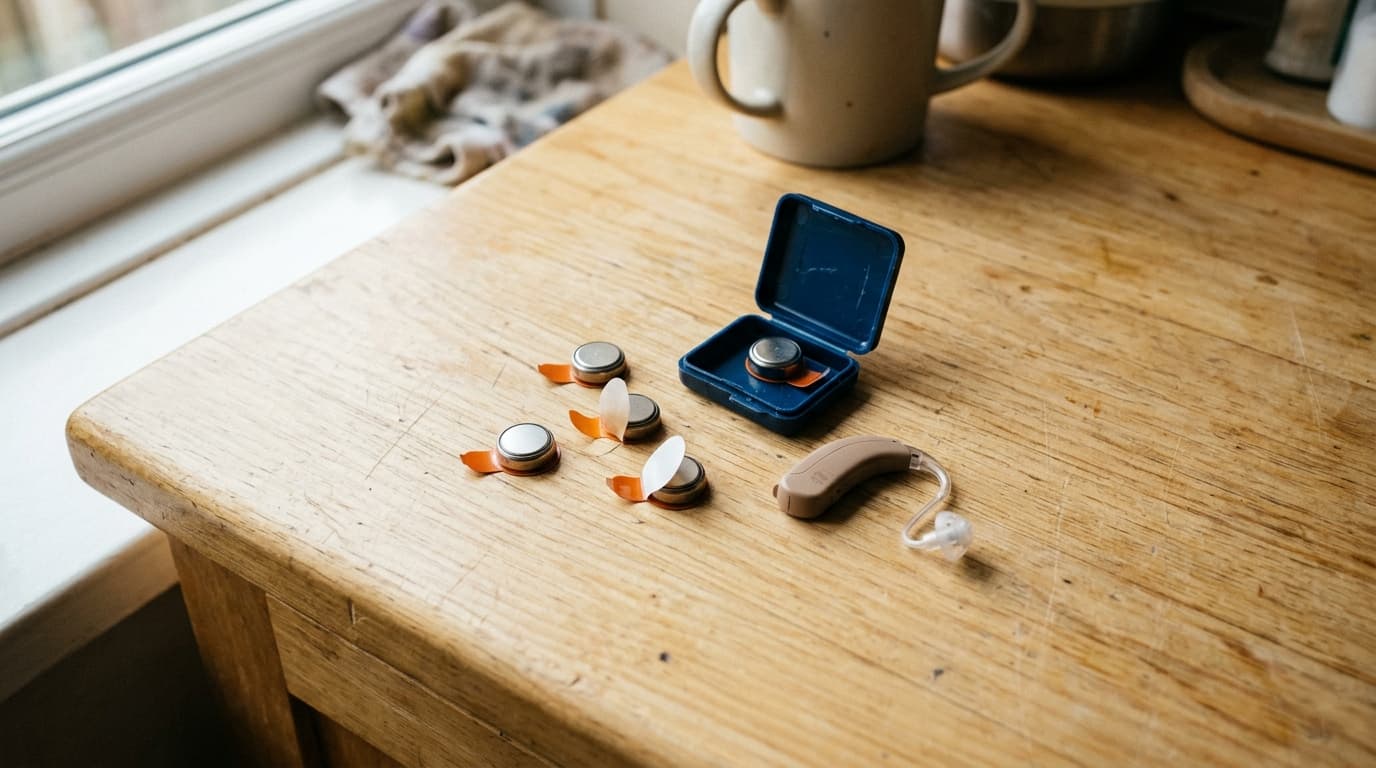
The main advantage is simpler handling. Instead of peeling tabs from small zinc-air cells and opening a battery drawer, the aids go into a charging case. This may be particularly useful for reduced dexterity, tremor, arthritis or limited vision.
Rechargeable models can also provide:
- A consistent nightly routine.
- Fewer loose batteries to buy, carry and dispose of.
- Sealed cases with no battery door on many models.
- Charging cases that may provide power away from a socket, depending on model.
The compromise is dependence on the charging system. A lost or failed charger can be more disruptive than a depleted replaceable battery. Rechargeable cells also lose capacity with age and eventually need professional service.
Advantages of replaceable batteries
Replaceable zinc-air batteries can be changed immediately. A small packet provides a straightforward backup during travel or a power cut. Some people already use them confidently and prefer not to alter a familiar routine.
They may suit someone who:
- Spends long periods away from reliable charging.
- Wants to restore power immediately.
- Can handle small batteries safely.
- Prefers a model or style that is not available with rechargeable power.
The disadvantages are repeated battery handling, ongoing supply and loose-button-battery safety.
Current examples of each approach
Many current flagship receiver-in-canal hearing aids are rechargeable. Replaceable batteries have not disappeared, but they are more commonly found in selected receiver-in-canal, custom and power hearing aids. These examples were checked against UK manufacturer information on 21 August 2026.
Rechargeable
Phonak Audéo Infinio Ultra R
- Why compare it
- A current receiver-in-canal family in which the power source is part of the model design.
- Check before choosing
- The battery arrangement is not a user-selectable option after the aid has been chosen.
Choose a model above to see the comparison without squeezing several columns onto a small screen.
This is not a ranking or a complete product list. Availability, technology level, hearing-loss suitability, charger type and expected runtime should be confirmed for the exact aid on the written recommendation. Do not choose an older or less suitable model only to obtain a preferred battery type.
How long does one charge or battery last?
There is no reliable site-wide number. Runtime is affected by device model, battery size, hearing-loss prescription, hours worn, wireless streaming and cell age. Bluetooth audio generally uses more power than ordinary listening.
Ask for model-specific answers to these questions:
- What is the stated runtime under ordinary use?
- What happens with several hours of streaming?
- How long does a full charge take?
- Does the case hold additional charges?
- What backup is available if the charger fails?
- How is the internal battery serviced when capacity declines?
Which is easier with arthritis or poor eyesight?
Rechargeable aids often avoid the hardest task, handling a tiny battery and tab. That does not automatically make the complete device easy. The charger wells, insertion, removal, controls and wax filters also need to be manageable.
A larger replaceable-battery BTE device may still be easier for some people than a tiny rechargeable RIC. Handling should be tested with the actual aid, not inferred from the word rechargeable.
Are hearing-aid batteries dangerous?
Button batteries can cause severe injury if swallowed or inserted into an ear or nose. The Guy's and St Thomas' NHS safety guidance stresses the risk to children and vulnerable adults. Keep loose cells and used batteries out of reach, use tamper-resistant compartments where appropriate and seek urgent medical help if ingestion is suspected.
Rechargeable devices reduce routine access to loose batteries but still contain a battery and must be handled according to the manufacturer's instructions.
What about holidays and flights?
For rechargeable aids, take the charger, cable and any required plug adaptor. A charging case or approved power bank may provide resilience, but compatibility should be checked. Keep hearing aids and batteries in hand luggage and follow current airline rules for lithium batteries and electronic devices.
For replaceable-battery aids, carry enough correct-size batteries and store them so their tabs and terminals are protected. Do not rely on finding the right size after arrival.
What if the charger fails or the power goes off?
A replaceable-battery aid can normally be restored immediately by inserting a fresh battery. That is its clearest resilience advantage, provided the correct batteries are available and can be handled safely.
Rechargeable resilience depends on the charging arrangement. Some models have portable cases with their own stored power, while others use a desktop charger that needs an external supply. Before ordering, ask whether a second charger is available, whether the case can charge without being plugged in, how many additional charges it stores and how quickly a failed charger can be replaced. A generic promise of a portable charger is not enough because charger compatibility is model specific.
Does rechargeable mean more expensive?
Pricing depends on the whole technology package, not just the battery. Compare the complete written price, charger, warranty, fitting and aftercare. Ask whether charger replacement or internal battery service is covered.
Our guide to private hearing-aid prices explains why the device price alone is an incomplete comparison.
How to decide
Choose rechargeable when a nightly charging routine is realistic and avoiding tiny batteries would make daily use easier. Choose replaceable batteries when immediate swaps, long travel or independence from a charger are more important. Then verify that the selected aid meets the hearing prescription, physical fit and feature needs.