
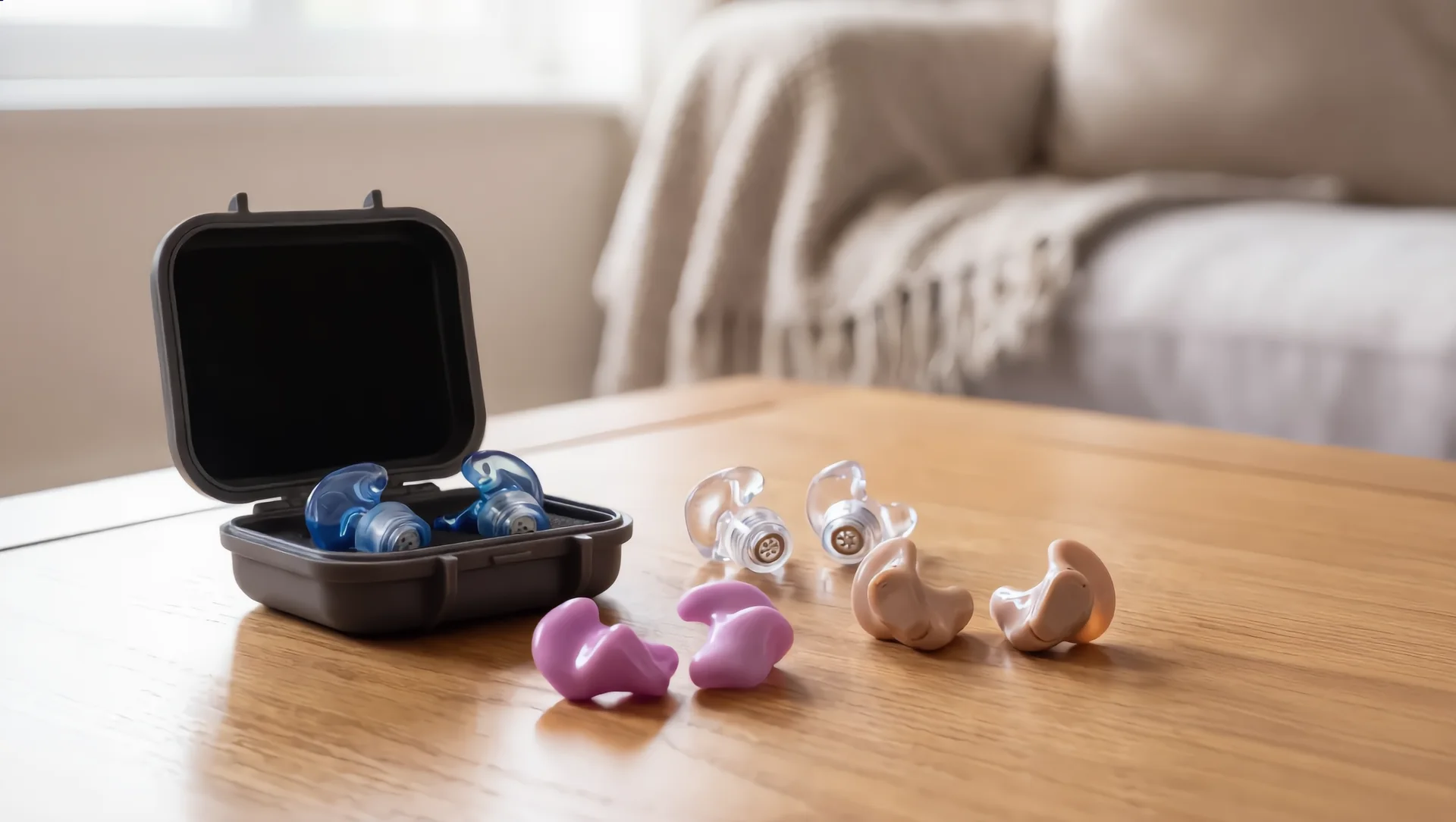
Custom ear mould impressions are the starting point for any ear product that needs to fit you and only you. Whether you are looking at hearing protection for work, swim plugs for the pool, musician plugs for gigs and rehearsals, or moulds for a hearing aid, the process begins with a precise impression of your ear.
This guide explains what an ear mould impression is, who may need one, what happens during the appointment, and how Hear Better's mobile service in the North East works. The aim is to help you understand whether booking an impression appointment is the right next step for what you need.
Choose the type of custom mould you need
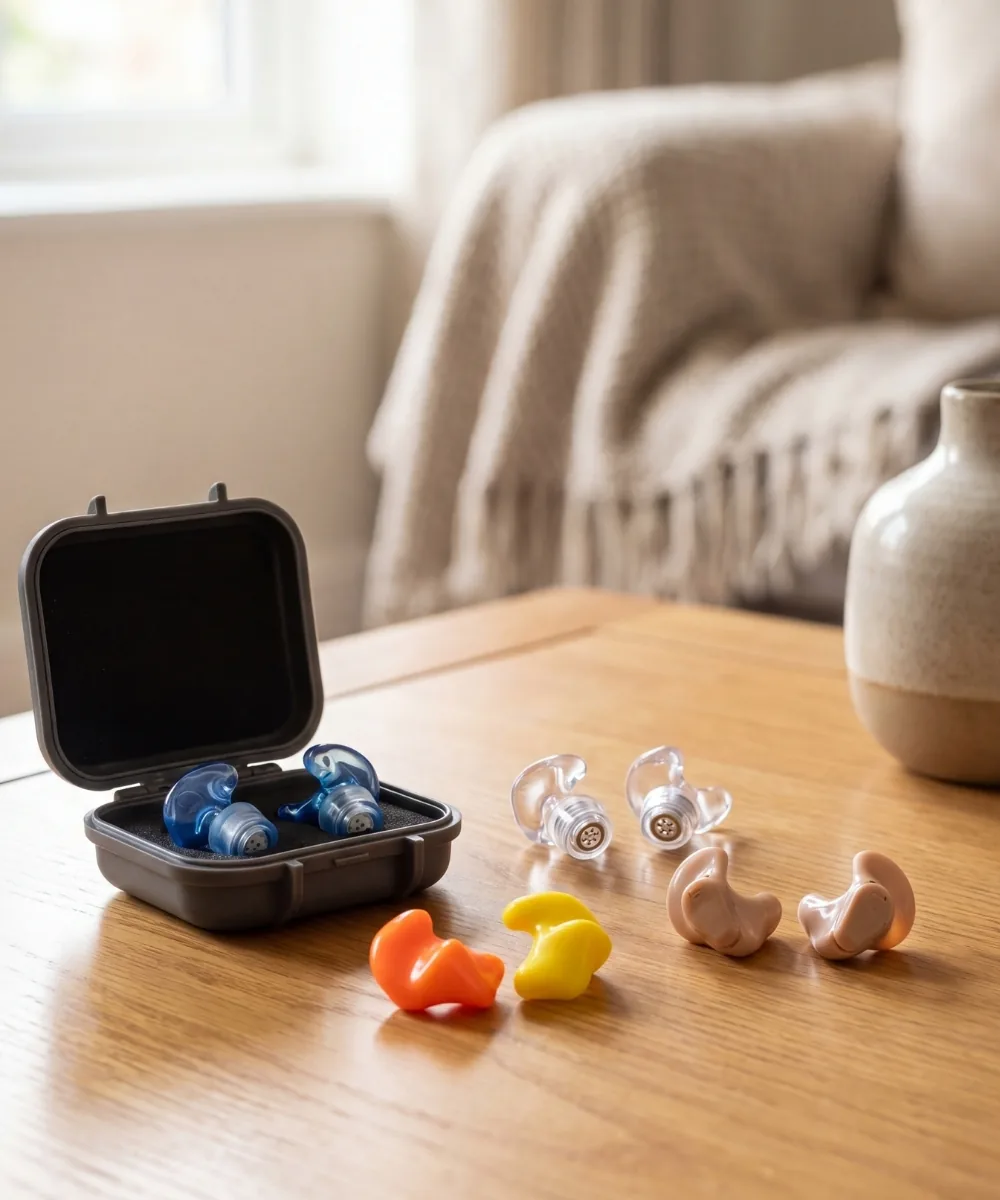
The impression process is similar, but the finished product must be selected for the job it needs to do. Use this quick comparison as a starting point.
Your use case
Noise protection at work
Custom protection selected around the workplace noise assessment
Required protection level, communication and warning-signal needs
An impression records the shape of the ear. It does not determine the correct filter, material or acoustic specification by itself. Hear Better checks how the finished product will be used before the impression is taken.
What is a custom ear mould impression?
A custom ear mould impression is a precise physical replica of your ear canal and outer ear. It is taken using a soft impression material that sets gently inside the ear. Your audiologist places the material carefully into the canal and the outer bowl of the ear, lets it cure for a few minutes, and then removes it as a single piece.
The result is an accurate three-dimensional record of your ear's shape, which can then be used by a specialist laboratory to create the finished custom product.
The reason this matters is simple. No two ears are the same. The canal twists and tapers differently in every person, the outer ear varies in size and depth, and even your left and right ears can be noticeably different from each other.
Off-the-shelf earplugs and silicone tips are designed around an average. That means they fit some people well, fit others poorly, and fit nobody perfectly. A custom mould reduces that gap because it is made around your individual ear shape.
Why fit matters more than people think
A poorly fitting earplug or hearing aid mould is not just uncomfortable. It can fail at the job it was designed to do.
Hearing protection that does not seal properly can let harmful noise through. Swim plugs that do not sit securely can let water in. Hearing aid moulds that do not fit precisely can cause whistling feedback, slip out during the day, or stop the device from delivering sound as effectively as it should.
A custom impression helps solve these problems before they start, because the finished product is built around your ear rather than the other way around.
Who needs custom ear mould impressions?
Custom ear moulds are used by a wide range of people for a wide range of reasons. The appointment process is similar regardless of what the finished product is for, but the final mould will be made for a specific use.
Below are some of the most common reasons people book custom ear mould impressions.
People who need hearing protection for work
If your job exposes you to loud noise on a regular basis, generic foam plugs may not be the most comfortable or consistent option.
The Health and Safety Executive explains that the Control of Noise at Work Regulations use daily or weekly exposure action values of 80 dB(A) and 85 dB(A), alongside separate peak values. Employers must assess risk and reduce exposure, and provide hearing protection where risk cannot be controlled sufficiently by other means. The exact duty depends on measured exposure, not a comparison with a familiar everyday sound.
Both reusable custom protection and disposable plugs need to be suitable for the noise risk and worn correctly. A custom product may improve comfort or repeatable placement for some people, but it should not be presented as automatically providing better protection. Workplace selection should follow the employer's noise assessment and occupational-health arrangements.
Some types of custom hearing protection can also be made with filters that reduce harmful sound while still allowing important speech, warning signals or environmental sound through. If you need hearing protection for work, it is also worth checking whether your employer has occupational health requirements or support in place.
Swimmers and water sports users
Custom swim plugs are designed to help keep water out of the ear canal. They may be useful for people who swim regularly, people who are prone to ear irritation after swimming, or anyone who finds standard swim plugs uncomfortable or unreliable.
Because they are made from your own ear impression, they are designed to seal more securely than generic silicone plugs. They are also easier to keep track of, can be made in different colours, and can be more comfortable for repeated use.
If you have grommets, a perforated eardrum, recent ear surgery or ongoing ear symptoms, it is important to get appropriate medical advice before using swim plugs or booking impressions.
Musicians, sound engineers and gig-goers
Standard foam earplugs can reduce volume, but they often distort sound. That can be frustrating for anyone whose work, hobby or enjoyment depends on hearing music clearly.
Custom musician plugs can use specialist filters that reduce volume more evenly across frequencies. The goal is to make music quieter without making it muddy or dull. They are commonly used by musicians, DJs, sound engineers, music teachers and regular gig-goers who want to protect their hearing while still enjoying the detail of the sound.
Motorcyclists and motorsport users
Wind noise inside a motorcycle helmet at higher speeds can be tiring and uncomfortable. Custom motorcycle plugs are designed to reduce the constant rush of wind noise while still allowing important sounds through.
For many riders, the benefit is not just hearing protection. It is also comfort, reduced fatigue and a calmer riding experience on longer journeys.
Hearing aid users
Many hearing aids use generic domes or tips, and these work well for lots of people. However, some hearing aids work better with a custom-made earmould, particularly where a more secure fit, stronger sound delivery or feedback control is needed.
A custom hearing aid mould attaches to the hearing aid and sits inside the ear canal. If your audiologist has recommended a custom earmould for your hearing aid, an impression appointment is the first step.
If you are still comparing devices and fitting styles, start with Hear Better's guide to hearing aids fitted and supported at home.
Sleep plugs and everyday noise reduction
Light sleepers, shift workers, people living near busy roads, or people dealing with noisy neighbours may consider custom sleep plugs. Because they are moulded to your ear, they can be more comfortable than foam plugs and may be less likely to fall out during the night.
For side sleepers, fit is especially important. A plug that sits too proud in the ear can become uncomfortable when your head is on the pillow, while a custom option can be made to sit more neatly.
What happens during the appointment?
A Hear Better impression appointment is straightforward and usually takes around thirty to forty minutes from start to finish. Your mobile audiologist comes to your home or workplace with the equipment needed, so there is no travel involved and no waiting room.
Here is what to expect at each stage.
Step 1: Conversation and choice of product
The appointment starts with a short discussion about what you are looking for. If you already know you want hearing protection, swim plugs, musician plugs, sleep plugs or moulds for a specific hearing aid, your audiologist will confirm the details and check that the product is suitable for your situation.
If you are not entirely sure, that is fine too. Your audiologist will ask how the plugs or moulds will be used, the environments you will wear them in, and any comfort or fit issues you have had in the past. They can then talk through what is likely to suit you best.
Step 2: A physical check of your ears
Before any impression material goes into the ear, your audiologist will examine both ears with an otoscope. This is partly to check for excess ear wax, which may need to be removed before an impression can be taken, and partly to make sure there is nothing else that would make the procedure unsuitable.
Examples might include an active infection, significant inflammation, recent surgery or a perforation that needs medical clearance. If wax or anything else is found, your audiologist will explain the next step. In some cases, wax removal may be arranged before the impression appointment can be completed.
Step 3: Placing the oto-block
A small piece of foam called an oto-block is gently placed into the ear canal first. It sits at a controlled depth that your audiologist can see clearly.
Its purpose is to act as a safe stopping point for the impression material. The block protects the eardrum and ensures the impression captures the correct length of canal without going further than it should.
Step 4: Taking the impression
A soft, two-part impression material is mixed and gently placed into the ear canal and outer bowl of the ear using a smooth, controlled application.
The material is soft and pliable when it goes in, sets gradually over the next few minutes, and should not be painful. You may feel mild fullness or pressure while it cures, similar to the feeling of wearing earplugs, but the process is usually very straightforward.
Most people are surprised by how simple the appointment feels.
Step 5: Removal and inspection
Once the material has set, your audiologist carefully removes it from the ear in a single piece, along with the oto-block. They will then inspect the impression to make sure it has captured enough of the canal and outer ear to produce a quality finished product.
If anything looks incomplete, the impression can be retaken there and then. That is much better than discovering an issue later when the finished mould is being made.
Step 6: Next steps and order details
With good impressions taken, your audiologist will confirm the details of the finished product. This may include the type of plug or mould, the filter or vent specification if relevant, colour choice, and any optional features such as cords, handles or labels.
The impressions are then sent to a specialist laboratory or manufacturer, depending on the product being ordered. The finished custom product is typically ready within a few weeks. Hear Better will explain the expected timeframe and the next step at your appointment.
Is taking an impression safe?
Ear mould impressions are a routine procedure when carried out by an appropriately trained professional using the correct technique. The British Society of Audiology's aural-impression procedure describes the history, ear examination, contraindication checks, otostop placement and post-impression examination involved.
The procedure does have a small number of situations where it may not be suitable without further assessment. These can include active ear infections, recent ear surgery, perforated eardrums that have not been assessed, and some skin conditions affecting the ear canal.
Your audiologist will check for these as part of the appointment, which is why the initial ear examination is so important.
How long do custom ear moulds last?
A well-made custom ear mould is a long-term piece of kit. For adults whose ears have stopped changing shape, a set of moulds can last several years, depending on how often they are used and how well they are looked after.
Hearing aid earmoulds may need replacing sooner, especially with daily wear or if your hearing needs change over time. Children's moulds usually need replacing more often because the ear is still growing.
Looking after your custom moulds
Custom moulds last longer with a bit of routine care. Wipe them down after use, store them in the supplied case rather than loose in a bag or pocket, and clean them periodically according to the instructions supplied with the finished product.
For hearing aid moulds, your audiologist can show you the cleaning steps that suit your device. If a mould starts to feel loose, uncomfortable, damaged or less effective, it may be time for a new impression.
Home appointments across the North East
Hear Better provides home and workplace impression appointments throughout the North East of England. That includes Newcastle, Sunderland, Durham, Gateshead, South Shields, Middlesbrough, Stockton, Hartlepool, Darlington and the surrounding areas.
Because your audiologist travels to you, there is no need to plan transport, take time out of your day for travel, or sit in a waiting room. You can be seen in an environment you are comfortable in.
For workplace bookings, it also means staff can be fitted without leaving the site.
Frequently asked questions
If you are not sure whether you need an impression appointment, you can also compare it with a free home hearing test or read more about home ear wax removal.
How long does an appointment take?
A home impression appointment usually takes around thirty to forty minutes from start to finish, depending on what is being made and whether both ears are being checked.
Does taking an impression hurt?
The procedure should not be painful, although mild fullness while the material sets is common. Tell the professional immediately if you feel pain or unexpected discomfort so the procedure can be stopped and the ear checked.
Can children have impressions taken?
Suitability depends on the child's age, the reason for the impression, cooperation and ear health. A parent or carer should ask the provider about their paediatric service before booking, and medical advice may be needed first in some cases.
What if I already have ear wax?
If wax is present, your audiologist will check whether it needs to be removed before the impression can be taken. In some cases, wax removal may be arranged first so the impression is accurate and comfortable.