
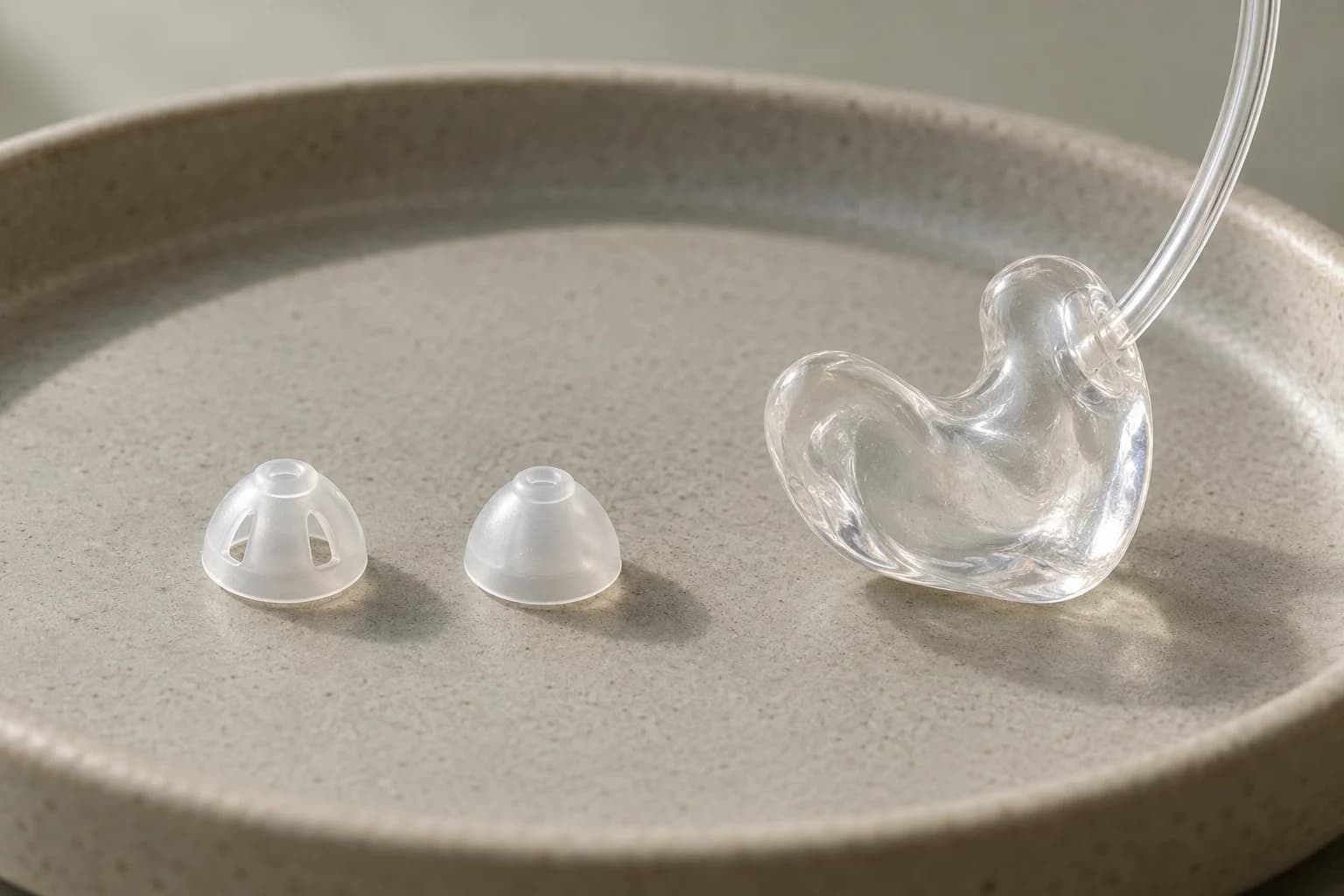
A dome is a ready-made soft tip; a custom earmould is made to fit your ear. Neither is best for everyone. The choice depends on the hearing aid, the sound it needs to deliver, your ear and how comfortably you can manage it.
The earpiece is part of the fitted system. Do not change its type, size or venting because another option looks more comfortable online. Ask the provider supporting your aids to check the fit and sound together.
What is a hearing-aid dome?
A dome is a small flexible tip fitted to a compatible receiver or thin tube. It comes in different sizes and designs. “Open” domes have openings; more closed designs let less sound pass through those openings.
Those differences affect how sound reaches and escapes the ear canal. A more open tip is not automatically more suitable, and a more closed tip is not simply a stronger version. UCLH's hearing-aid guidance explains why the earpiece is selected around the hearing loss and practical circumstances.
What is a custom earmould?
It is an individually made earpiece. With a conventional behind-the-ear aid it may connect through acoustic tubing; a receiver-in-canal aid can also have a custom earpiece. Having a mould does not mean all the electronics sit inside it.
Shape, material and venting are chosen for the fitting. UCLH's earmould information describes how a mould helps hold the aid in place and retain the sound it produces.
Our ear-impression guide explains the separate appointment used to make some custom products. The impression is a step in the process, not the finished hearing-aid fitting.
How is the right earpiece chosen?
Ask the clinician to explain the recommendation using your results and daily routine:
- Sound: can this fitting deliver the response needed for your hearing?
- Comfort: does it sit securely without soreness or pressure?
- Handling: can you put it in, remove it and carry out the care routine?
- Support: which exact replacements fit, and who should check a problem?
There is no reliable rule that every mild loss needs a dome or every greater loss needs the same mould. The hearing-aid types guide puts the earpiece in the context of the whole device.
Can I swap an open dome for a closed one?
Ask your provider first. A different dome or mould changes the acoustic fitting, so the settings and checks may need to change too. A compatible-looking tip is not enough to establish a safe, suitable replacement.
Request the exact manufacturer, design and size, with a demonstration of any replacement task you are expected to manage. Follow the instructions for your product; Oticon's replacement guidance, for example, covers its own earpieces. Our care guide explains safe first checks.
What if my ear feels blocked or sore?
Tell the provider whether you mean a full feeling, an altered sound to your own voice, pressure or pain. These descriptions help them investigate; they do not prove that you need a larger, smaller or more open earpiece.
Do not keep wearing a painful fitting to get used to it. Seek advice if a part is damaged or remains in the ear, and do not try to retrieve it with tools. New hearing loss with pain or discharge needs urgent GP or NHS 111 advice; see the NHS hearing-loss guidance.
For problems with grip, glasses or small parts, our handling guide has questions to take to your appointment.
What should I confirm before choosing?
Ask what the earpiece includes in the complete quote, how replacements are obtained, what they cost and what happens if the fit needs changing. Confirm any manufacturing time and refitting arrangements with the actual provider.
Hear Better provides adult home hearing assessments and independent hearing-aid advice across North East England. Explore hearing aids and fitting at home, or contact us about an existing fitting. If another provider supplied your aids, ask them about compatible parts and support first.