
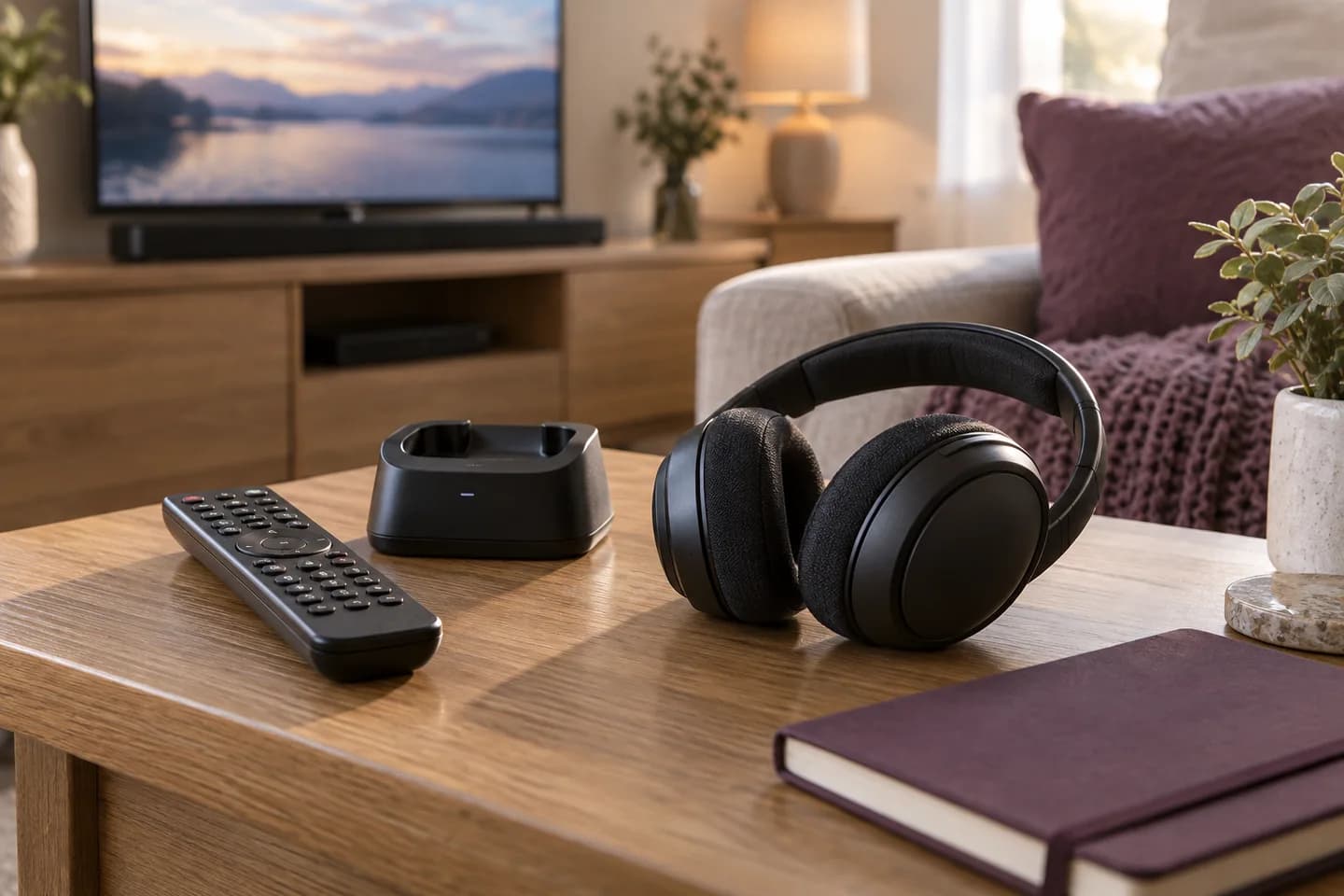
Assistive listening devices help with particular situations, such as hearing the television, following one speaker or receiving sound from a venue’s audio system. Some work with compatible hearing aids; others use headphones or a separate receiver. Alerting equipment serves a different purpose, using light or vibration to draw attention to events such as a doorbell or alarm.
Start with the task you want to improve. An accessory is useful only if it suits your hearing, works with your equipment and is manageable day to day. Hear Better’s hearing-aid assessment and aftercare can include discussion of listening needs; availability and suitability of any accessory should be confirmed individually.
Which options match which situations?
| Situation | Option to ask about | What needs checking |
|---|---|---|
| Television is hard to follow | TV listener, suitable headphones or a hearing-aid TV accessory | TV connections, compatibility and whether others can still hear the speakers. |
| One speaker is distant or hard to hear | Remote microphone or personal listener | Receiver requirements, microphone placement and how it works in that setting. |
| A venue offers assisted listening | Hearing loop or another venue system | The system available and the receiver or hearing-aid feature it requires. |
| Calls are difficult | Phone accessibility settings, compatible streaming or text support | The actual phone, hearing device and functions you need. |
| Doorbells or alarms are missed | Appropriate visual or vibrating alerting equipment | Installation, coverage and suitability for the particular safety task. |
NICE recommends discussing assistive devices as part of adult hearing care. The choice need not start with replacing a hearing aid: identify the unresolved problem and compare appropriate options.
How does a remote microphone help?
A microphone near the person speaking can send their voice to a compatible receiving device. It may help when distance or competing sound makes that speaker difficult to follow. It does not make every conversation in a room equally clear.
Before choosing one, describe how it would be used: one colleague across a meeting table, a partner on a walk, or several people taking turns. Ask for a demonstration with the actual hearing aids or receiver you use. Group conversations, charging and handling can create different requirements from a one-to-one demonstration.
RNID explains personal listening systems. For the underlying hearing-aid limitations, see our background-noise guide.
Will every hearing aid work with a hearing loop?
No. A hearing loop requires a telecoil receiver, which is not included in every hearing aid. The appropriate setting may also need enabling. Ask your clinician to show you how to use it, and check with venue staff that their system is available and working.
Other public listening systems may require different receivers or compatible devices. A Bluetooth label alone does not establish that a hearing aid will work with every venue system. RNID’s guide to public assistive listening explains the options.
What should you check for TV and telephone use?
Make a note of the exact model numbers before shopping. A TV accessory must connect to the television and to the intended hearing devices. A phone may support one function, such as app controls, without supporting every call or streaming feature you expect.
Our Bluetooth compatibility guide explains these distinctions. Ask whether an accessory, adapter or separate purchase is needed, and confirm the return and support terms in writing.
What about smoke alarms and other important alerts?
Do not assume that making an ordinary alarm louder, or wearing hearing aids, resolves an alerting problem. Describe what you need to notice, including when your hearing aids are out. Ask the appropriate supplier or local support service about equipment designed for that purpose.
For fire safety, seek advice from your local fire and rescue service about suitable alarms and the home setup. Generic phone notifications or a pictured listening product should not be treated as a substitute for appropriate fire-warning equipment.
What should you ask before buying?
Consider simple communication changes alongside equipment. If your hearing has not been assessed, a free adult home hearing test is a sensible routine starting point. Explore more options in our hearing-aid advice hub.