
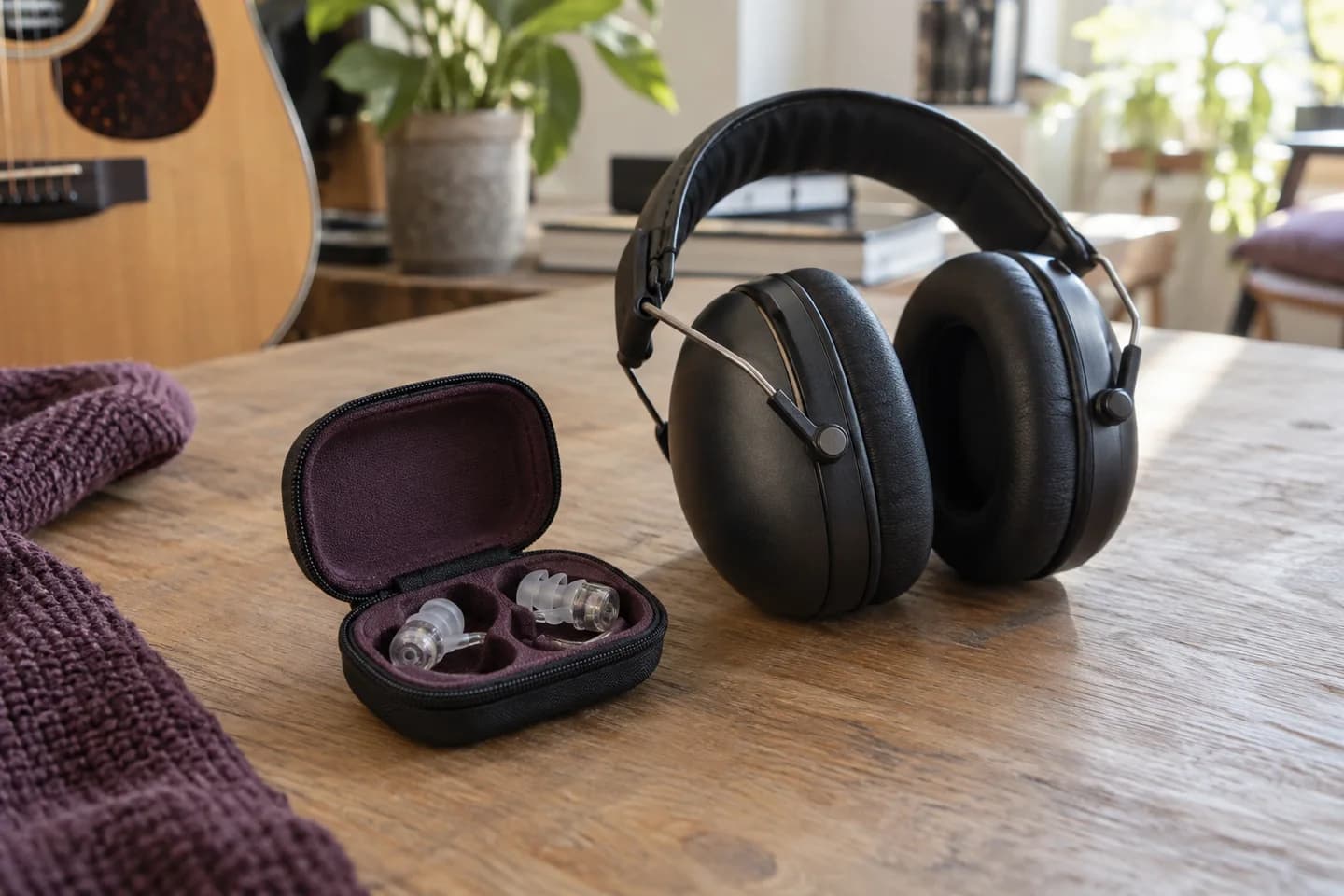
Protecting your hearing means reducing exposure to loud sound and using suitable protection when it is needed. Volume, time and the setting all matter. Earplugs can help when correctly selected and fitted, but they do not make unlimited noise exposure safe.
The useful starting point is your activity: headphones on a commute, a live concert or a noisy job call for different choices. If you are considering custom protection, Hear Better provides adult ear mould impressions; the finished product and its suitability are separate decisions.
What can you change when using headphones?
Listen at a comfortable level, use available volume warnings or limiters and take regular breaks. In a noisy place, turning the volume up to overcome everything around you can increase exposure. Noise-cancelling headphones may help you listen at a lower level, but ordinary music headphones are not automatically workplace hearing protection.
For a practical routine, check the volume before starting, notice when you are increasing it and build quieter breaks into long listening sessions. RNID’s safe music guidance explains the risks and useful changes. No single percentage on every phone guarantees a safe listening level.
How should you prepare for a concert or festival?
| Before you go | While you are there |
|---|---|
| Choose suitable earplugs and learn how to fit them. | Wear them correctly during loud exposure, rather than waiting for discomfort. |
| Put the case somewhere you will remember. | Keep away from loudspeakers and use quieter areas for breaks. |
| Check the product instructions and condition. | Recheck the fit if a plug becomes loose or is removed. |
Musician-style plugs are designed for listening situations where sound quality matters as well as reducing level. Different products offer different attenuation and fit. Ask what the product is intended for rather than judging protection by how expensive or discreet it looks.
What is different about noisy work?
Workplace hearing protection should follow the employer’s noise assessment and control measures. HSE explains that protectors supplement noise reduction; they should not replace efforts to control the noise itself.
The right choice must account for the task, fit, other protective equipment and the need to hear relevant signals. Maximum attenuation is not automatically the right answer. Ask the responsible person at work which requirements apply before ordering a product or booking impressions.
Read HSE’s hearing-protection guidance. Hear Better’s impression appointment does not replace a workplace noise assessment or certify a product for a particular job.
Are custom earplugs always better?
Custom fit is one option, not a guarantee of the right protection. Disposable plugs, reusable plugs and ear defenders may each suit particular needs. Selection, correct use and condition matter as well as comfort.
An impression records the shape of your ear so a suitable laboratory or supplier can make a custom product. The impression itself has no protection rating. Confirm the finished product, intended use, filter or attenuation requirements and supplier instructions before proceeding.
Our custom ear mould guide explains the appointment. Hear Better’s recorded impression price is £50, with finished products quoted separately. We check your ears first and discuss whether impressions are appropriate.
What should you ask before choosing protection?
If you already have a supplier specification, bring it to the discussion. Ask about the complete product cost and order arrangements, not only the price of taking an impression. Do not assume swimming plugs and noise-protection plugs are interchangeable.
What if hearing changes after noise exposure?
Do not use a later hearing test as permission to continue harmful exposure. If hearing drops suddenly, seek urgent medical help rather than waiting for a routine appointment. Tinnitus with sudden hearing loss, facial weakness or vertigo needs the emergency route described in NHS tinnitus advice.
For gradual changes, arrange a hearing assessment and discuss the noise you encounter. Our hearing loss guide and tinnitus guide explain the relevant next steps.
How can Hear Better help?
For impressions, discuss your custom ear mould requirements before ordering a finished product. For routine hearing concerns, request a free adult home hearing test. You can also browse the hearing loss and ear health hub for related advice.