
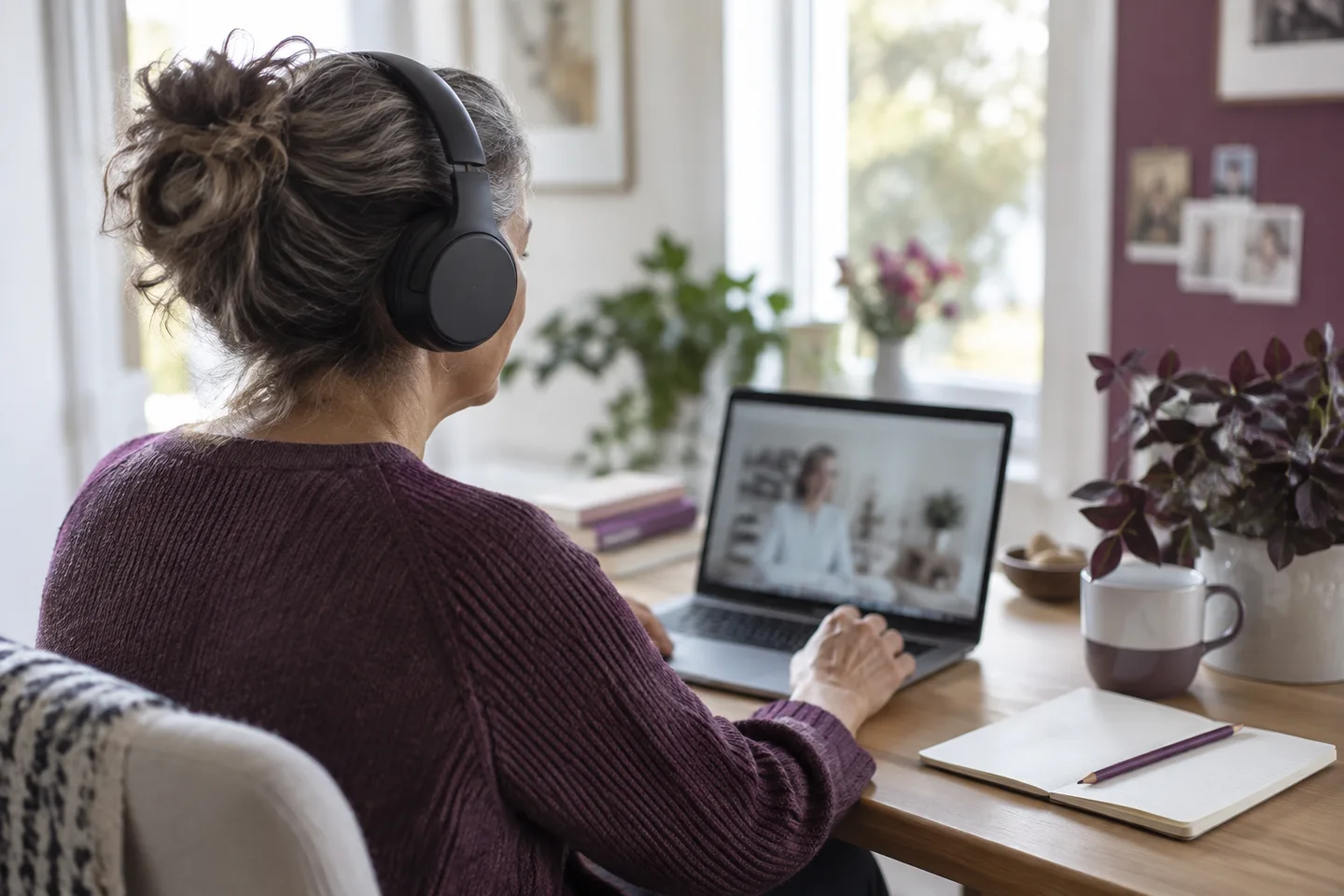
An online hearing check is a screening step, while a professional hearing assessment investigates your hearing in more detail. A check may suggest that you should arrange an appointment. It cannot look inside your ears, establish every cause of difficulty or provide the full assessment needed to choose prescription hearing aids.
The NHS describes online adult hearing checks as a way to identify whether a face-to-face test is needed. You can also go straight to a free home hearing assessment if you already have concerns. You do not need an online result before contacting Hear Better.
What is the difference?
| Question | Online screening | Professional assessment |
|---|---|---|
| What is the purpose? | To flag a possible hearing difficulty and suggest a next step. | To assess hearing needs and discuss suitable management or referral. |
| Are my ears examined? | No physical ear examination takes place. | An ear examination can identify findings that affect testing or the next step. |
| What information is used? | Responses to the particular check, sometimes with a questionnaire. | Your history, listening needs, ear findings and appropriate test results. |
| What do I receive? | A screening result or recommendation, depending on the tool. | An explanation of findings, limitations and available options. |
Different online tools work differently. Read their instructions and intended use rather than treating every app, quiz or headphone test as equivalent. The RNID hearing check is one option linked from the NHS. It is intended for adults who have not already been diagnosed with hearing loss. RNID advises against taking it if the background noise it plays would be uncomfortable for you.
Can an online result tell me which hearing aid to buy?
It is not a substitute for the individual assessment and fitting information needed for prescription hearing aids. Before choosing a device, you need to understand your hearing results, ear health, listening goals and practical needs.
For example, an online recommendation to seek a test does not tell you whether wax is affecting the result, whether further investigation is appropriate, or which physical fitting you can use comfortably. Those are questions for an appointment.
Our guide to choosing hearing aids explains what to compare once your hearing needs have been assessed.
What if the result looks reassuring but I still struggle?
Arrange professional advice if you continue to notice difficulty. A screening result does not cancel out the problems you experience at work, on the phone or around a family table.
Write down a couple of examples: the setting, who was speaking and what you missed. Save the name and date of the online check if you want to discuss it, but do not spend weeks repeating checks while postponing an appointment.
The signs of hearing change guide can help you describe what you have noticed. If symptoms are sudden or worsening quickly, follow urgent medical advice rather than repeating a screening tool.
How should you approach an online check?
Do not turn a check into a competition for a better score. The useful outcome is a decision about whether you need an assessment, not a number to compare with friends.
What happens at a professional home assessment?
At Hear Better, the visit starts with a conversation and an ear check, followed by hearing testing where appropriate. The clinician explains the results and whether hearing aids, further assessment or another next step should be considered. The room and testing conditions matter; a home visit does not mean every specialist investigation can be done there.
Read what happens during a home hearing test, including how to prepare the room and what to ask about limitations. If you already have a chart, our audiogram guide explains the basic terms.
Is a professional test always paid?
No. NHS hearing tests are available through the appropriate referral route. Hear Better also offers a free adult hearing test at home across its North East service area, with no obligation to buy hearing aids. Private hearing aids, wax removal and other paid services are separate decisions.
If you would prefer a routine home appointment, explore our free hearing-test service. To keep researching, browse hearing-test advice. For a child’s hearing concerns, use the GP or relevant NHS pathway; Hear Better’s service is for adults.