
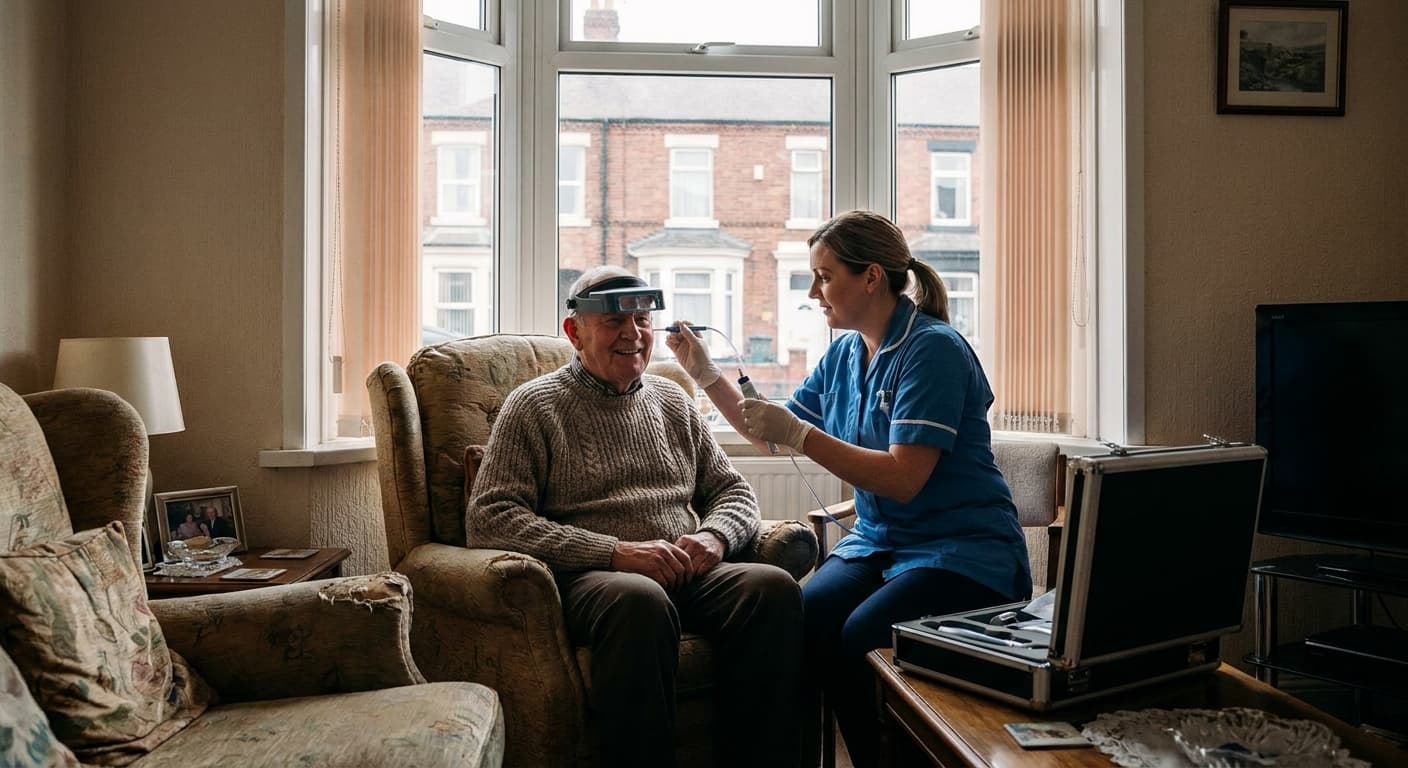
If you have been told you need ear wax removed, you will probably come across two methods: microsuction and ear syringing. They are often discussed as if they were interchangeable, but they work in fundamentally different ways, carry different risk profiles, and suit different ears. Choosing between them is not just a matter of preference.
This guide compares both methods properly: how each one works, what the evidence and national guidance say about safety, why ear syringing has largely disappeared from GP surgeries, and how to work out which method is appropriate for your ears. It is written for patients in the North East weighing up their options, but the clinical information applies anywhere in the UK.
Why you suddenly have to choose at all
Ear-wax provision varies between local NHS services, so it is worth checking what is commissioned in your area. People who choose private care may also be offered different methods. The important distinction is between older manual syringing and modern electronic irrigation, rather than treating every water-based method as the same procedure.
The result is that most people now arrange wax removal privately, which puts the choice of method in their own hands for the first time. That makes it worth understanding what each method actually involves, because the differences are bigger than most people expect.
What ear syringing actually involves
Ear syringing, more accurately called ear irrigation in its modern form, works by directing a controlled stream of warm water into the ear canal to soften and flush wax out. Older manual syringes have been replaced in most settings by electronic irrigators that regulate water pressure, which made the procedure considerably safer than its reputation suggests.
Irrigation usually requires preparation. Wax needs softening with olive oil or similar drops for several days beforehand, otherwise the water cannot dislodge it effectively and the procedure may need repeating. The practitioner cannot see inside the canal while the water is doing its work, which is the method's central limitation: it is performed partly blind.
When carried out correctly on a suitable ear, irrigation is effective and safe for most people. The qualifier matters, though. It is unsuitable for anyone with a perforated eardrum, grommets, a history of ear surgery, recurring ear infections or an actively inflamed canal, because introducing water into those ears carries genuine risk.
What microsuction actually involves
Microsuction takes a completely different approach. Instead of flushing the canal with water, the practitioner uses a fine, low-pressure suction device to lift wax out directly, while viewing the canal under magnification through loupes or a microscope. Nothing enters the ear except the suction tip, and the practitioner can see precisely what they are doing at every moment.
Direct vision allows the practitioner to watch the wax and canal throughout and stop when necessary. Because no water is introduced, microsuction may be considered where irrigation is contraindicated. That does not make every perforated, post-surgical or infection-prone ear automatically suitable: the history and current ear findings must be assessed first.
Microsuction is also quicker in most cases. Both ears can typically be cleared in fifteen to thirty minutes, often without days of softening drops beforehand, although drops can still help when wax is very hard or impacted.
What national guidance recommends
NICE guidance on hearing loss in adults recommends electronic irrigation, microsuction or another method such as manual removal when performed by a trained practitioner with the correct equipment. It specifically advises against older manual syringing. Both modern methods therefore have a place, with the choice depending on the individual ear.
Microsuction offers direct vision and keeps the canal dry. Electronic irrigation can also be appropriate where there are no contraindications. Neither method is universally safer for every patient, so the pre-treatment examination, history and practitioner's competence matter more than a blanket claim.
The differences side by side
Here is how the two methods compare on the points that matter most to patients.
How they compare side by side
- How it works: microsuction lifts wax out with gentle suction under direct vision; irrigation flushes it out with a stream of warm water
- Visibility: microsuction is watched through magnification throughout; irrigation is performed without continuous sight of the canal
- Water: none with microsuction; irrigation leaves the canal wet, with a small associated infection risk
- Preparation: microsuction often needs none; irrigation usually requires several days of softening drops first
- Perforated eardrums, grommets, ear surgery: microsuction is suitable; irrigation is not
- Speed: microsuction typically clears both ears in 15 to 30 minutes; irrigation can take longer and sometimes needs repeating
- Sensation: microsuction is noisy but dry; irrigation involves a flushing sensation some people find uncomfortable
Which method is right for you?
For most adults with uncomplicated wax build-up and a healthy ear, either modern method will do the job safely. The decision becomes clear-cut when any complicating factor is present.
Microsuction may be considered if irrigation is unsuitable, including in some people with relevant ear history, but previous perforation, grommets, surgery, infection or narrow canals all require proper assessment. Softening drops may still be recommended depending on the wax.
Whichever method is used, the non-negotiable part is the assessment beforehand. A proper otoscopic examination of both ears before any removal is what makes the procedure safe, because it is how contraindications get caught. Any provider that skips the examination and goes straight to removal should be avoided.
Microsuction at home across the North East
Hear Better provides home microsuction appointments across the North East, carried out by Liam Robson, an HCPC-registered audiologist. Every appointment begins with a full examination of both ears, the method and findings are explained before anything is removed, and aftercare advice is provided before the visit ends. If you are searching by proximity, our guide to finding professional microsuction near you explains what to check before booking. Appointments cover Newcastle, Sunderland, Durham, Darlington, Middlesbrough and the surrounding towns and villages.
Home visits remove the travel, the parking and the waiting room, which matters most for older patients, people with mobility concerns, and families arranging treatment for a relative. Pricing is fixed and explained when you book, with no obligation to take any further service.
You can read more on the home ear wax removal service page, check the signs that you might need microsuction, or contact Hear Better to talk through your situation.
Common questions about microsuction and ear syringing
Does microsuction hurt?
Most people find microsuction comfortable. The suction device produces a gentle low-pressure draw, and many patients describe it as a mild pressure sensation or a soft buzzing sound rather than anything painful. The procedure is stopped immediately if you experience any discomfort.
How long does ear wax removal take?
A typical microsuction appointment takes around 30 minutes in total, including the initial ear examination and a check after treatment. The removal itself often takes less than 20 minutes, depending on the amount and type of wax present.
Can both ears be treated in the same appointment?
Yes. If both ears need treatment, your audiologist will examine and treat both in the same visit. You do not need to book separate appointments.
Do I need to use softening drops before microsuction?
Not always. Microsuction can often be performed without pre-softening. In some cases, particularly where wax is very hard or impacted, using drops for a few days beforehand can help the procedure go more smoothly. Your audiologist will advise you when you book.
Can I get microsuction on the NHS?
NHS access varies by local commissioning arrangements. Ask your GP practice or local NHS service what is available in your area. Hear Better offers private home appointments for people who prefer that route.