
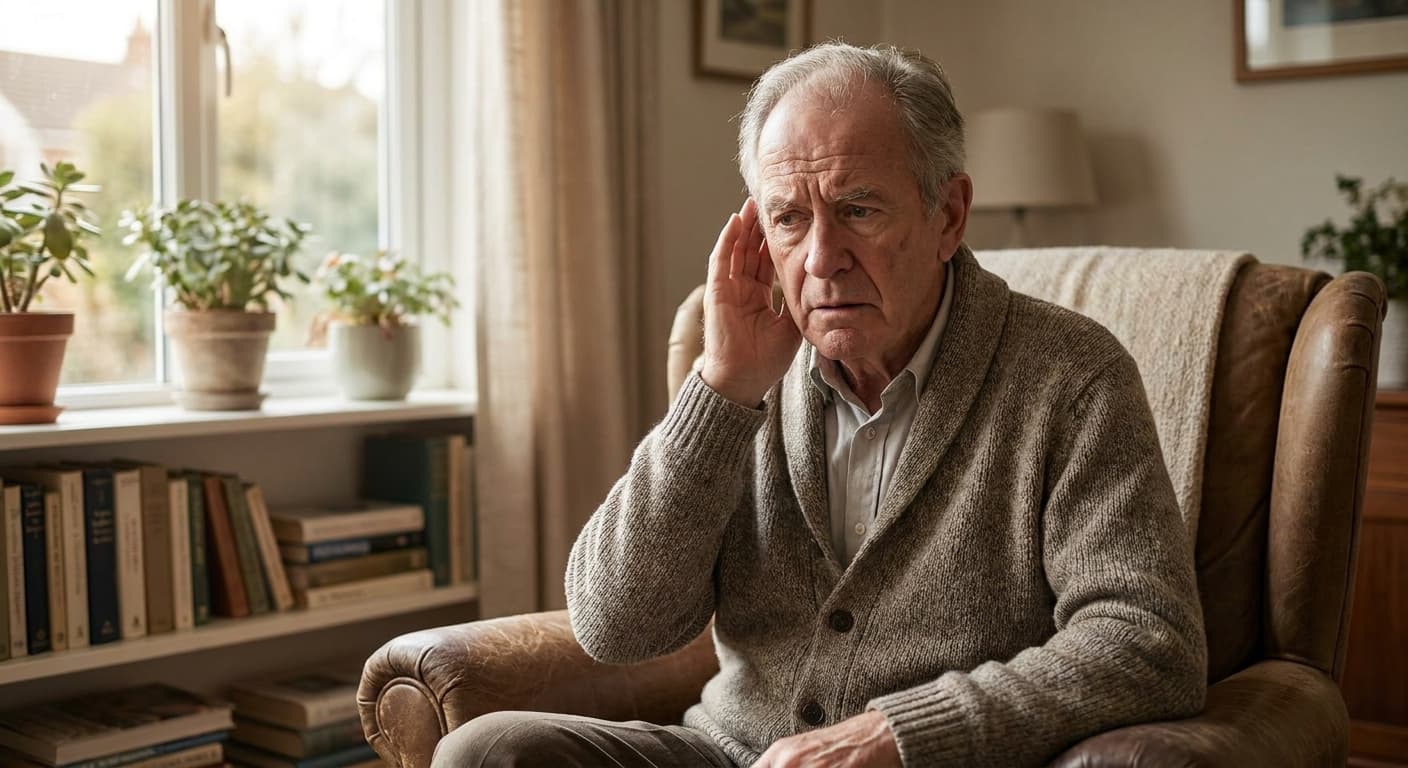
Muffled hearing, a blocked sensation and sounds seeming quieter can be caused by ear wax, but symptoms alone cannot confirm it. Sometimes wax is contributing, sometimes there is an underlying hearing change, and sometimes both are present. Looking into the ear and, where needed, testing the hearing is the reliable way to tell.
This guide explains how ear wax affects hearing, how to recognise when wax may be the problem, and what to do if you are not sure whether you need ear wax removal, a hearing test or both. If you are in the North East and want a professional opinion at home, Hear Better can assess both in the same visit.
How ear wax affects your hearing
Ear wax, cerumen, is produced naturally by the ear as a protective mechanism. In most people it migrates out of the ear canal on its own without causing problems. However, for some people, wax builds up faster than it clears. When enough accumulates, it can partially or fully block the ear canal, creating a physical barrier that reduces how clearly sound reaches the eardrum.
The result is often described as hearing through cotton wool. Sounds feel muffled or dampened, voices may seem less clear, and there can be a sensation of fullness or pressure in the ear. Some people also notice a low-level ringing or humming sound, dull earache or an itching sensation alongside the reduction in hearing clarity.
When wax is the only cause, hearing often improves after the blockage is removed. If muffled hearing remains, it should not be assumed that more wax is present: a hearing assessment can check for an underlying change.
Audiologists call this a conductive component: sound is being physically obstructed on its way through the ear canal. When wax is confirmed as the cause, removal may restore hearing towards its previous level. The NHS overview of earwax build-up lists hearing loss, earache, tinnitus and itching among the possible symptoms, while also making clear that professional help may be needed if treatment does not work.
How to tell the difference between wax and hearing loss
This is the question that brings many people to Hear Better, and the honest answer is that you usually cannot be certain without someone looking in your ear. Otoscopy can confirm whether wax is present, but the amount seen and the rest of the assessment determine whether it is likely to explain the symptoms. Patterns can offer clues, but they are not a diagnosis.
Wax-related symptoms can develop gradually or seem to change more quickly, and may affect one ear more than the other. Fullness, blockage or itching can occur. Age-related hearing loss more often develops gradually and can make restaurants, group conversations, television and phone calls harder. These patterns overlap, so speed or symmetry should not be used to rule a cause in or out.
People often describe wax blockage as muffled sound. Age-related hearing loss commonly affects higher frequencies, which can reduce the clarity of consonants. A description of the sound alone still cannot replace an ear examination and hearing test.
In practice, the two can coexist. Someone with underlying age-related hearing loss may also have a wax build-up that is making things worse. Treating the wax can improve clarity, but a hearing test is still worthwhile to understand the full picture. A professional home audiology appointment with Hear Better can address both in a single visit.
Signs the problem may be ear wax
- The muffled feeling came on relatively quickly, over days or weeks rather than years
- One ear is noticeably more affected than the other
- There is a feeling of fullness, pressure or blockage inside the ear
- Sounds seem muffled rather than completely absent
- You have a history of wax build-up or have needed ear cleaning before
- You wear hearing aids and have previously experienced wax build-up
Signs the problem may be hearing loss
- The change has happened gradually over months or years rather than suddenly
- Both ears seem similarly affected
- There is no sensation of fullness or blockage
- You find it harder to follow conversations in noisy environments specifically
- High-pitched sounds, such as birdsong or certain voices, are harder to hear than low ones
- Others in your family have had age-related hearing loss
What to do if your hearing feels muffled or blocked
The most useful thing you can do is have your ears properly examined. Do not put cotton buds or other objects into the ear canal, because this can push wax further in. The NHS says there is no evidence that ear candles or ear vacuums remove wax. Pharmacy-advised softening drops can be suitable for some mild build-up, but they should not be used if you have a perforated eardrum and they are not a substitute for urgent assessment of sudden hearing loss.
A professional ear check takes only a few minutes. Using an otoscope, an audiologist can see directly into the ear canal and confirm whether wax is present and, if so, whether it is significant enough to be causing or contributing to your symptoms. If wax is not the issue, that finding itself is useful: it means a hearing test should be the next step.
Ear wax and hearing aids: a particular challenge
If you wear hearing aids and notice a drop in sound quality, a blocked wax guard or sound outlet, battery problems, moisture, device damage, settings, a change in hearing or wax in the ear are all possibilities. Hearing aids sit in or around the ear canal, so wax can also block parts of the device and reduce the sound reaching your ear.
An ear check is sensible when symptoms or device performance change. If confirmed wax blockage is removed, hearing or aid performance may improve, but this is not guaranteed. If sound quality does not improve, the device, its settings and your hearing may all need review.
Hear Better works with hearing aid wearers across the North East and can check both your ears and your aid performance in the same home visit.
Can ear wax cause tinnitus?
Ear wax pressing against the eardrum can sometimes cause or worsen a low-level ringing, buzzing or humming sound, a form of tinnitus. This is not always the case, and tinnitus has many possible causes, but when wax is a contributing factor, clearing the blockage can reduce or resolve the sound.
If you have persistent tinnitus that does not improve after ear wax removal, a full hearing assessment is the recommended next step. Tinnitus is common and in most cases manageable, but it is worth having a professional assessment to understand what is happening and discuss the options available to you.
Getting your ears checked at home in the North East
Hear Better provides mobile audiology appointments across the North East, including Newcastle, Sunderland, Durham, Darlington, Middlesbrough, Gateshead, Hartlepool, Stockton-on-Tees, North Tyneside, Northumberland and the surrounding area. Appointments take place in your home, with the audiologist bringing the appropriate equipment.
If you are unsure whether you need ear wax removal, a hearing test or both, you do not need to work it out in advance. A Hear Better home visit starts with a thorough ear examination and a conversation about what you have been noticing. From there, your audiologist will talk through what they find and what they recommend, with no pressure to commit to anything.
You can read more about what to expect from our ear wax removal service, our free home hearing tests, or explore the difference between microsuction and ear syringing if you are weighing up your options.
Frequently asked questions
Can ear wax cause sudden hearing loss?
A significant wax build-up can cause a fairly rapid reduction in hearing, particularly if wax shifts position and creates a more complete blockage. This can feel sudden even if the wax has been accumulating over a longer period. True sudden sensorineural hearing loss, where the inner ear or auditory nerve is involved, is a separate and less common condition that requires urgent medical assessment. If you have very rapid hearing loss in one or both ears with no obvious cause, seek medical advice promptly.
How often does ear wax need to be removed professionally?
This varies considerably between individuals. Some people never need professional wax removal; others produce wax quickly and benefit from a check every few months. Hearing aid wearers often find an annual or biannual ear check useful. There is no single recommendation: it depends on how your ears behave.
Do I need a hearing test after ear wax removal?
Not always, but it is a reasonable next step if muffled hearing persists after treatment or if you have been concerned about your hearing more generally. Removing wax sometimes reveals an underlying hearing change that was previously masked. A home hearing test with Hear Better is free and can give you a clear picture of where your hearing currently sits.
Are cotton buds safe to use for ear wax?
Cotton buds are not recommended for use inside the ear canal. They tend to push wax deeper rather than removing it, can compact wax against the eardrum, and carry a small risk of damaging the delicate skin of the canal. For mild wax build-up, softening drops are a safer approach. For anything more significant, a professional ear check is the right starting point.