

If your ears feel blocked, muffled or full and the problem is not shifting on its own, ear wax build-up is one of the most common causes. For people in Sunderland and the surrounding area, Hear Better offers professional ear wax removal at home, so you can get the right help without travelling to a clinic or waiting for an NHS referral.
This guide walks through what actually happens during a home visit in Sunderland, step by step, so you know what to expect before anyone arrives at your door. If you are ready to book, the dedicated ear wax removal in Sunderland page covers pricing, availability and appointment requests directly.
What this guide covers
- Signs your blocked ear may be caused by wax
- What happens when the audiologist arrives
- How microsuction works and what it feels like
- When to see a GP before booking removal
- Aftercare and booking your visit in Sunderland
Signs your ear may be blocked with wax
Ear wax is normal and usually clears itself. Problems start when it builds up faster than the ear can move it out naturally. This can happen to anyone, but is more common in people who wear hearing aids or earbuds regularly, use cotton buds, have narrow or curved ear canals, or simply produce wax in larger quantities than average.
The most common signs of a significant wax build-up include muffled or dulled hearing, a sensation of fullness or pressure in the ear, itching inside the canal, and sound that seems noticeably different between your two ears. Some people also notice a mild ache, hearing aid feedback that was not there before, or a ringing or buzzing sound in the affected ear.
If several of these symptoms appeared gradually, wax may be contributing, but symptoms alone cannot confirm the cause. A professional ear examination is the quickest way to establish whether wax is present and whether removal is appropriate.
What happens when the audiologist arrives
Hear Better provides mobile ear wax removal across Sunderland and the wider North East. Your audiologist travels to your home, sets up the necessary equipment, and carries out the appointment in whatever room is most comfortable for you. There is no clinic waiting room, no parking to find and no need to arrange transport.
This matters for a lot of people in Sunderland, including older adults who find travelling difficult, people with mobility concerns, and anyone who simply prefers to be assessed in a familiar environment. The appointment takes around thirty to forty-five minutes, depending on how much wax is present and whether both ears need attention.
Before any removal is carried out, your audiologist will examine both ear canals with an otoscope to assess what is present and confirm the right approach. If wax removal is appropriate, they will explain the method they plan to use and check whether you have any relevant medical history, such as previous ear infections, a perforated eardrum or ear surgery.
How microsuction ear wax removal works
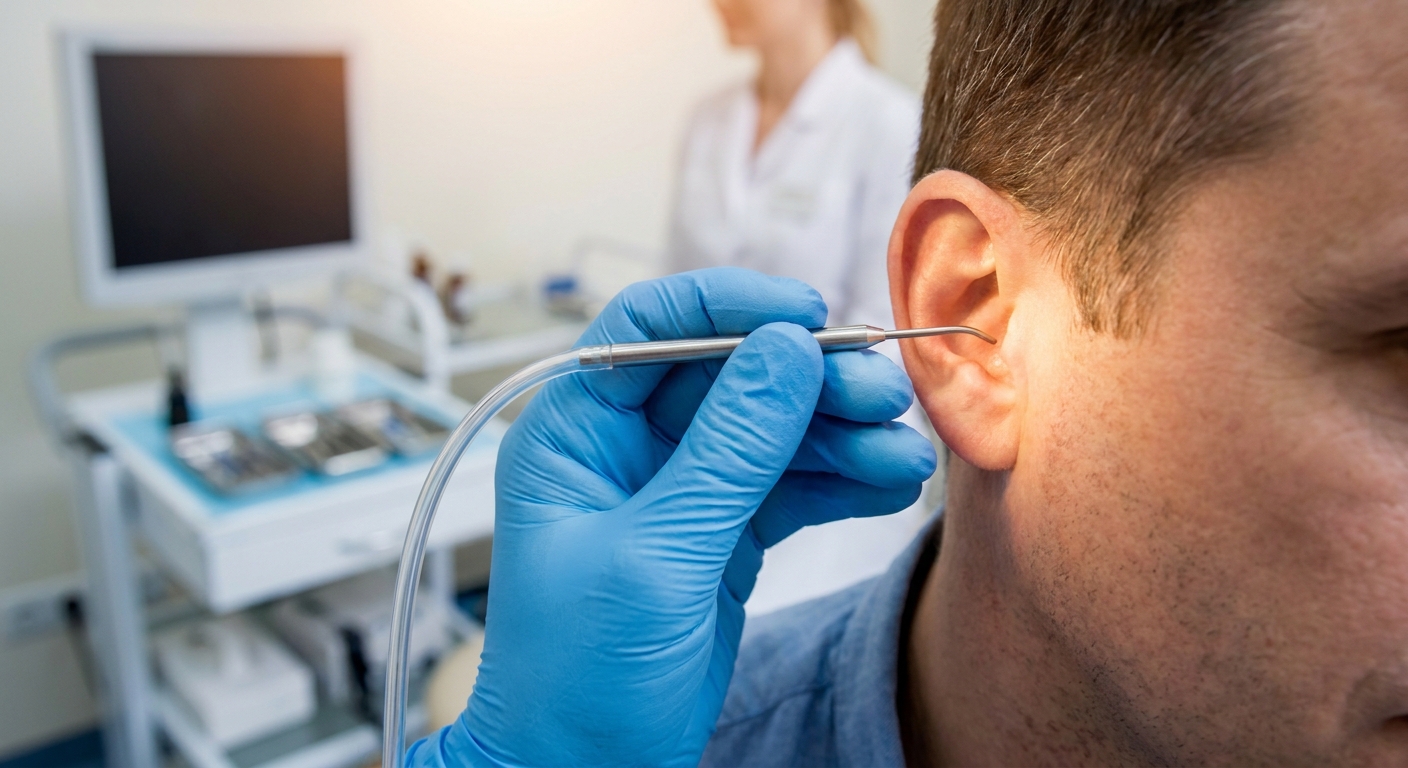
Microsuction is the method Hear Better uses for many ear wax removal appointments. It uses a fine suction device while the audiologist views the canal with illumination and magnification. The canal remains dry, but suitability still depends on the ear examination and medical history. NICE guidance supports microsuction, electronic irrigation or another method such as manual removal when performed by a trained practitioner with the correct equipment, and advises against older manual syringing.
The procedure is usually quick. For most people, both ears can be cleared within fifteen to thirty minutes. The sensation is unfamiliar rather than painful. You will hear the noise of the suction device, which sounds louder than expected because of its proximity to the eardrum, but most people find the appointment more comfortable than they had anticipated.
After removal, many people notice an immediate difference in their hearing, sometimes quite striking if the wax had been causing significant blockage. Your audiologist will check both canals again at the end of the appointment to confirm everything is clear.
Microsuction compared to ear syringing
Older manual syringing and modern electronic irrigation are different procedures. Microsuction offers direct visibility and does not introduce water, while electronic irrigation may be appropriate for uncomplicated ears. People with a perforation, previous surgery, grommets or recurring infection need individual assessment before any method is chosen.
Is microsuction suitable for everyone?
Microsuction is suitable for most adults with ear wax build-up. There are a small number of situations where your audiologist would recommend seeing a GP first, including a current ear infection, a known perforation that has not been reviewed recently, or significant recent ear surgery. Your audiologist will ask about your ear history before the appointment and will always advise you clearly if a GP visit should come first.
When to see your GP before booking ear wax removal
There are situations where a GP visit should come before any ear wax removal. These include sudden or severe hearing loss that appeared without a gradual build-up, any sign of discharge from the ear, significant pain rather than mild discomfort, dizziness that affects your balance, or any history of ear surgery or a perforated eardrum that has not been reviewed in recent years.
These symptoms can sometimes indicate an underlying condition that needs medical assessment before wax removal takes place. If you are unsure, Hear Better can advise you over the phone on whether a GP appointment is recommended first. The aim is always to make sure the right approach is taken for your specific situation.
Should you use olive oil drops before your appointment?
Olive oil drops, available over the counter from any pharmacy, can soften harder wax and sometimes resolve mild build-up without any professional intervention. If your symptoms are mild and you are not in significant discomfort, it is reasonable to try drops for five to seven days first and see whether the blockage clears.
If symptoms persist after using drops, or if your hearing is significantly affected, professional removal is the more reliable option. Softening drops can also make microsuction easier if wax is particularly hard or compacted, so your audiologist may sometimes ask you to use them for a few days before your home appointment.
How to book ear wax removal in Sunderland
Booking is straightforward. Visit the ear wax removal Sunderland page to check pricing and request an appointment, or get in touch via the contact page and briefly describe your symptoms. You will be asked a few questions about your ear history to make sure a home appointment is appropriate, and a convenient time will be arranged for your visit.
Hear Better also covers Newcastle, Durham, Darlington, Middlesbrough, Gateshead and communities across Northumberland and the wider North East. If you are unsure whether your address falls within the service area, it is always worth calling to check.
If hearing remains reduced after wax has been cleared, or you have broader concerns, arrange a free home hearing test in Sunderland. This helps separate a temporary blockage from an underlying hearing change.
Related reading
If you found this guide useful, you may also want to read about the signs you might need ear wax removal, how microsuction compares to ear syringing, and how ear wax can affect your hearing.