
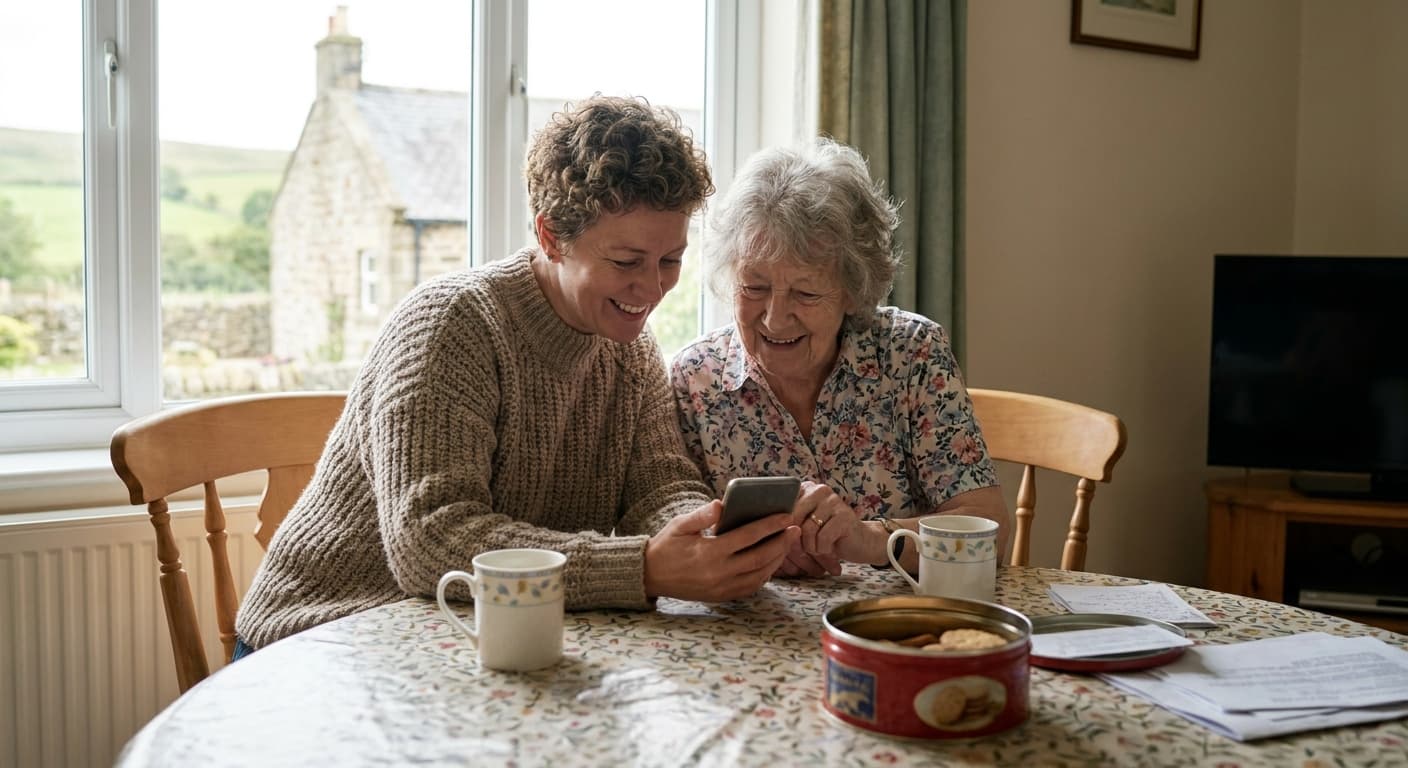
If you have noticed that your mum or dad is turning the television up louder than usual, asking people to repeat themselves, or going quieter in group conversations, it is natural to start wondering about their hearing. Getting them to act on it is often a different matter. Booking a hearing test for a parent can feel like a delicate conversation, and finding the right kind of appointment, one that works around their mobility, their comfort and their routine, takes a bit of planning.
This guide is written for family members across the North East who are doing exactly that. It covers the signs worth paying attention to, how to raise the subject, what a home hearing test actually involves, and how to make the whole process as straightforward as possible for both of you.
Signs your parent may need a hearing test
Hearing loss in older adults tends to develop gradually, which means both the person affected and the people around them often adjust to it slowly without fully realising what is happening. By the time it becomes obvious, it has usually been building for months or years.
These are the signs that most commonly prompt family members to get in touch with Hear Better:
- The television volume is noticeably higher than it used to be
- They frequently ask people to repeat themselves, particularly on the phone
- They seem to mishear words rather than miss them entirely, hearing something different from what was said
- They withdraw from group conversations, family meals or social occasions
- They do not hear the doorbell, a name being called from another room, or background sounds they used to notice
- They seem tired or frustrated after conversations that require concentration
- They have started to lip-read more visibly without realising they are doing it
These patterns are extremely common. RNID's current UK facts and figures show how many people live with hearing loss. Because age-related change often develops gradually, closing the gap between noticing a problem and arranging an assessment is frequently the role a family member ends up playing.
How to raise the subject without it becoming a battle
Many older adults resist the idea of a hearing test, not because they do not think anything is wrong, but because the word "audiologist" conjures up images of hard-sell high-street clinics, expensive hearing aids and the uncomfortable feeling of being told their hearing is failing. The resistance is often about identity and independence as much as anything else.
A few things tend to help. Framing it around convenience rather than necessity is usually more effective than pointing out the problem directly. Something like "I found someone who comes to the house, no travelling involved, just to have a proper look and tell us where things stand" lands differently from "I think you need your hearing tested."
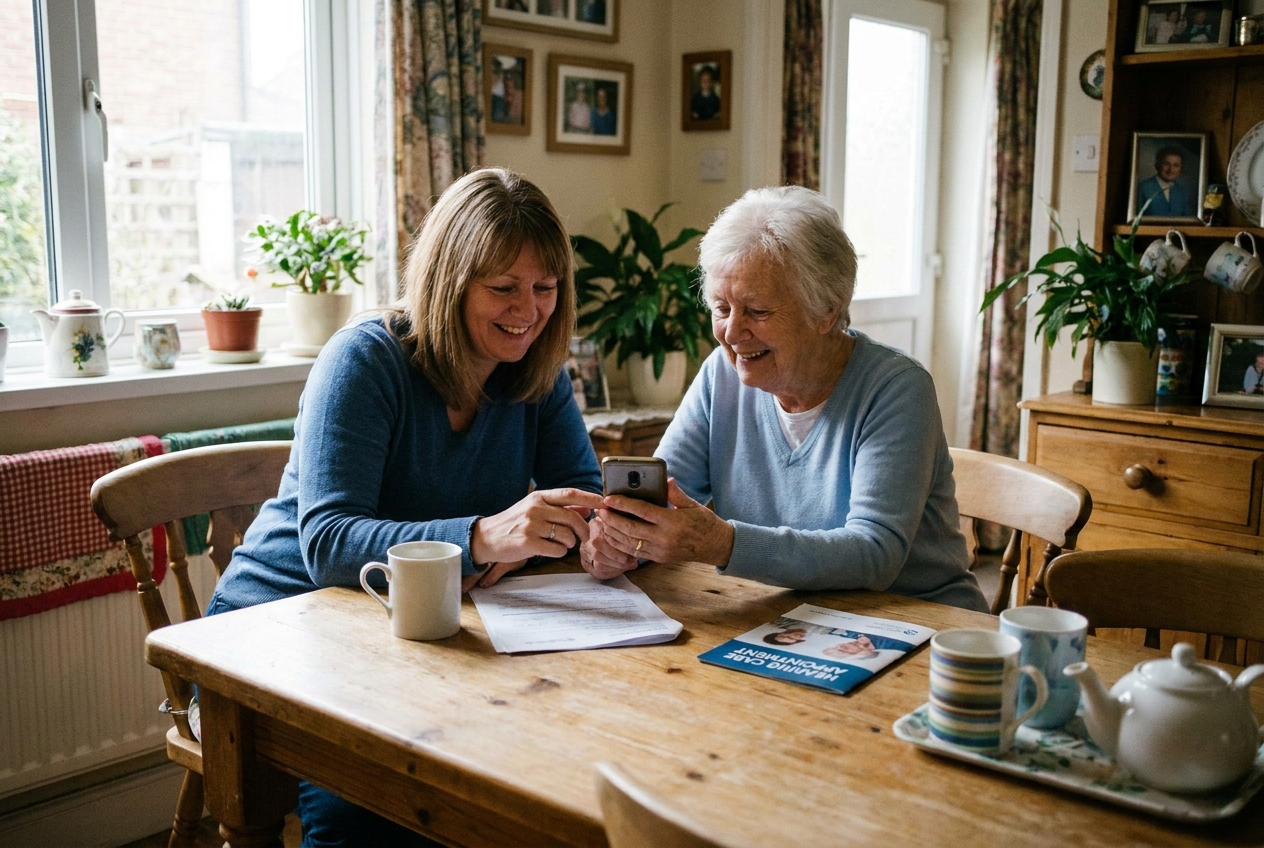
It also helps to be honest about your own role in the appointment. Let them know you can be there for the whole thing, that there is no obligation to do anything after the test, and that getting the results does not commit anyone to buying anything. At Hear Better, the home hearing test is free, and there is no pressure to take any next steps unless it makes sense to.
Why a home appointment works better for older adults
The practical advantages of a home hearing test are significant for older people. There is no journey to arrange, no unfamiliar building to navigate, no waiting room and no time pressure. Your parent stays in the environment they know, in a chair they are comfortable in, without any of the logistical effort that can make a clinic visit feel like more trouble than it is worth.
There is also a clinical benefit that is easy to overlook. A home assessment gives the audiologist a direct sense of the listening environment your parent actually lives in: the acoustics of their living room, the background noise they deal with daily, the distances at which they need to hear clearly. That context is useful when discussing results and next steps.

Family members are welcome to be present throughout the appointment. Many sons and daughters find it helpful to be in the room, both to support their parent and to hear the results and recommendations firsthand. If you are the one coordinating care, being there means you leave with the same understanding your parent has, which makes any follow-up decisions much easier.
What to expect on the day
A Hear Better home appointment is calm, unhurried and straightforward. The audiologist arrives at the agreed time, introduces themselves, and takes a few minutes to talk through your parent's hearing history and any specific concerns before anything else happens.
During the hearing test
The test itself uses calibrated audiometry equipment brought to the home. Your parent will be asked to listen to a series of tones through headphones and respond when they hear them. It is not uncomfortable and does not require any preparation. The audiologist will also check the ear canals visually before testing, which sometimes reveals wax build-up as a contributing factor to any hearing difficulties.
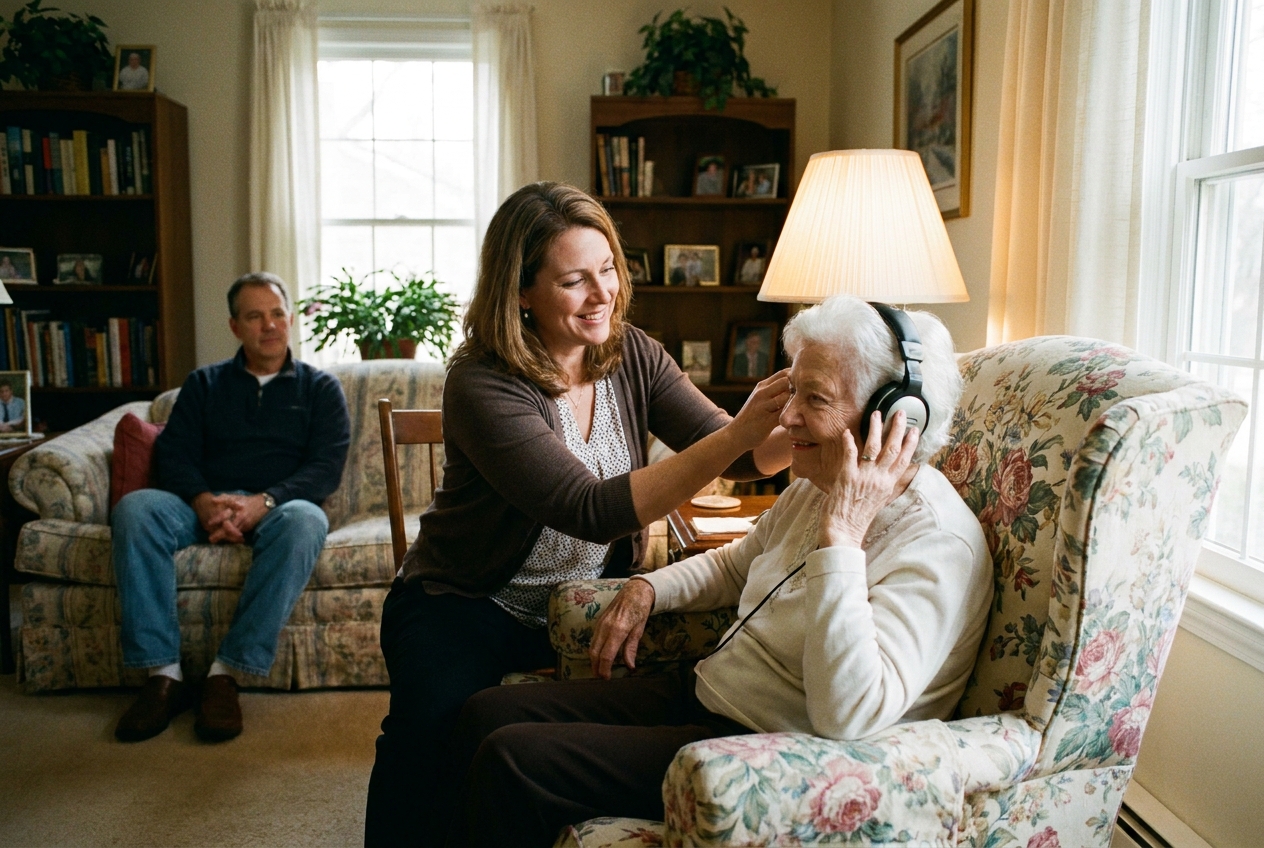
The full appointment typically takes around an hour, which includes the initial conversation, the test itself, and time afterwards to go through the results clearly. Nothing is rushed.
After the results
Once the test is complete, the audiologist will explain the results in plain language: what the findings show, what they mean in practical terms, and what the options are if any follow-up is recommended. If hearing aids are discussed, you can review Hear Better's independent hearing-aid advice and fitting service, with no obligation to proceed and no pressure to decide anything on the day. If ear wax removal appears to be relevant, that can often be arranged as a separate appointment.

Family members present can ask questions at this stage too. The aim is to leave the appointment with a clear picture of where things stand, not a sales conversation.
How to book a home hearing test for your parent
Booking is straightforward. You can call or use the contact form on the Hear Better website to arrange an appointment. It is completely fine to book on behalf of your parent. Many family members do this. Hear Better covers Newcastle, Sunderland, Durham, Darlington, Middlesbrough, Gateshead, Hartlepool, Stockton-on-Tees, North Tyneside, Northumberland and surrounding communities across the North East.
If you are unsure whether your parent's location is within the service area, just get in touch and it can be confirmed quickly. There is no commitment involved in making an enquiry.
If a test shows that hearing aids may help, read how assessment, fitting and lifetime support work for hearing aids in Durham and hearing aids in Darlington.
Common questions from family members
Can I stay in the room during the appointment?
Yes. Family members are welcome to be present throughout. Many older adults find it reassuring to have someone familiar with them, and it helps you follow the results and recommendations without having to rely on a second-hand account afterwards.
What if my parent is reluctant to have a test?
This is very common. The most effective approach is usually to keep it low-pressure: frame it as a quick check rather than a big intervention, emphasise that someone will come to them so there is no travelling involved, and make clear that nothing needs to be decided afterwards. The free home hearing test is a no-obligation appointment: your parent is not committing to anything by agreeing to it.
How much does it cost?
The home hearing test is free. If any follow-up services are recommended, such as ear wax removal or hearing aids, pricing will be explained clearly before anything is agreed. There are no hidden charges and no obligation to proceed with anything after the test.
What if it turns out to be ear wax rather than hearing loss?
It happens more often than people expect. Wax build-up can significantly muffle hearing and is sometimes the primary reason an older adult seems to be struggling. If wax is identified during the appointment, ear wax removal at home can be discussed as a separate service. Microsuction is one of the methods used where it is clinically appropriate.
Will my parent be pushed to buy hearing aids?
No. Hear Better's approach is to give clear results and honest advice, not to sell. If hearing aids are relevant to your parent's results, the options will be explained clearly. If they are not ready to take that step, or if aids are not what the results indicate, there is no pressure and no follow-up sales call.
Ready to arrange an appointment?
If you are thinking about booking a hearing test for a parent or older relative in the North East, the straightforward first step is to get in touch with Hear Better. The home hearing test is free, appointments are available across the region, and family members are welcome at every stage. You do not need to have all the answers before you call. A rough sense of location and availability is enough to get started.
For more on what a home appointment involves, take a look at the step-by-step guide to what happens during a home hearing test. And if you are not certain whether hearing loss or ear wax is the issue, the 10 signs you might need a hearing test guide is worth a read first.